The 2025 November survey estimate of 1,238,000 ducks in Louisiana’s coastal region and Little River basin (Table 1) is 143% higher than last November’s record low estimate of 510,000.
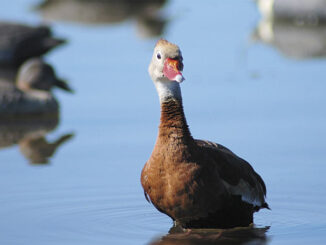
This year’s estimate is 40% higher than the most recent 5-year average (885,000), and 2% higher than the most recent 10-year average (1.2 million) (Table 2), but remains well below the long-term average of 2.14 million. It is the highest estimate since 2021. Increases from 2024 were observed for all species except blue-winged teal (-15%). The largest increases were observed in shovelers, green-wings, and gadwall. Compared to the small number of ring-necks observed last November, this year’s estimate of 382,000 ring-necks represents a 19,000% jump in the estimate for this species. It is also more than 155% and 108% higher than both its most recent 5- and 10-year averages (Table 2). 252,000 black-bellied whistling ducks were estimated across the coast, a 135% increase from the 107,000 estimated in 2024. Observers noted a more even distribution of ducks amongst the two coastal regions than has been seen in recent years. 63% of the ducks estimated on the coast were observed in the southwest.
Southwest Louisiana – 704,000
The duck estimate for SW Louisiana is the highest November estimate since 2021 (829,000). It is 114% higher than 2024 (284,000), and 24% and 7% higher than the most recent 5-year (566,000) and 10-year (660,000) averages respectively. Marsh conditions in the Southwest remain very good to excellent. Submerged aquatic vegetation (SAV) is widespread in areas. However, the agricultural fields of SW are still very dry. We estimated that less than 20% of the potential flooded agricultural habitat is holding water. Nevertheless, large concentrations of both ducks and geese were observed in the agricultural regions of Cameron Parish, the only location where geese were observed. Marsh habitat south of Grand Lake, including Rockefeller refuge, contained the largest concentration of ducks during the survey, and far southwestern marshes near Sabine Pass contained more ducks than have been observed in a while. Another notable region of abundance was west of Vermillion Bay.
Southeast Louisiana – 414,000
The duck estimate for SE Louisiana was the highest since 2017 (545,000). It is 207% higher than last November (107,000), and 78% higher than the most recent 5-year average (232,000). However, it is still 3% lower than the most recent 10-year average (426,000). Wetland habitats in the Southeast were also very good overall. As is often observed, large areas of hyacinth and salvinia coverage are prevalent in the southcentral freshwater marshes south of Gibson. Regardless, nearby open-water areas contained large rafts of ring-neck, gadwall, and coot, all three of which were largely absent in November 2024. Geographically the largest duck concentrations in the southeast were observed, in order of abundance, at the aforementioned marshes south of Gibson, the Delacroix region, Atchafalaya River outlet (Main Delta), and marshes from Hopedale to Buras. Few ducks were observed near the single transect at the mouth of the Mississippi River, which is unusual. However, the survey line doesn’t traverse Pass a Loutre WMA or much of Delta NWR.

Little River Basin – 120,000
Water level, measured at the center of Lake was just over 28.0 M.S.L. at the time of the survey. About 70% of the basin had suitable shallow “duck water.” Pintail made up 50% of the species composition, with ring-necks and gadwall making up another 21% and 16%, respectively. An additional 10,000 ducks were counted on Catahoula Lake NWR’s Little Lake, nearly 9,000 of which were ring-necks. Little human disturbance was observed during the time of the survey and the surrounding landscape in north Louisiana contained little surface water. These may have been factors in the largest LRB November duck count since 2016.
Northwest Louisiana – 10,000
Overall, northwest Louisiana is very dry. Most reservoirs are well below full pool. There was no survey completed in 2024, but the 10,000 ducks estimated along the Red River valley lowlands and reservoirs is 7% and 18% above the most recent 5-year (9,000) and 10-year (8,000) averages respectively. Gadwall was the most abundant species (4,000), followed by ring-neck, shoveler, and green-wings, each at 1,000. The majority of ducks were observed on managed wetlands in Bossier and Red River Parishes and along the river south of Shreveport to Lock 5. Few birds were also observed at the north end of Toledo Bend Reservoir.
The first segment of the West Zone duck season begins Saturday, November 15 and runs until Sunday, December 7. Following a single (12-day) split, it will re-open on Saturday, December 20 and conclude on Sunday, January 25.
The duck season in the East Zone opens Saturday, November 22 and runs until Monday, December 8. Following a single (11-day) split, it will re-open on Saturday, December 20 and conclude on Saturday, January 31.
Reminders:
The daily bag limit for mottled ducks is 0 for the first 15 days of the season, regardless of the zone being hunted, and will be 1 per day for the remaining 45 days.
The 2025-26 daily bag limit for pintails is 3 per day, only one of which may be a hen.