Early season looked good, later season to be better
According to the November 2025 waterfowl survey released by the Louisiana Department of Wildlife and Fisheries, the Louisiana coastal region held an estimated 1.238 million waterfowl, up 143 percent from November 2024 and 40 percent higher than the average for the past five years. However, it remains below the long-term average of 2.14 million.
The highest waterfowl concentrations occurred in Southwest Louisiana with 704,000 birds, the highest November estimate since 2021 and 114 percent higher than November 2024. In Southeast Louisiana, the state reported 414,000 ducks, 207 percent higher than November 2024 and 78 percent higher than the average for the past five years. However, the count remains three percent below the most recent 10-year average for that area.
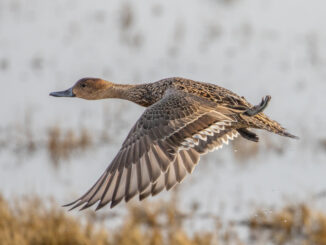
The Little River Basin, which includes Catahoula Lake, held 120,000 ducks, half of them pintails. Northwest Louisiana came in at 10,000 birds, with many reservoirs across the state below full pool. The Red River area held most of those birds.
“We’re having a good season, not a great one,” said Capt. Kirk Stansel with Hackberry Rod and Gun (337-762-3391, 888-762-3391, www.hackberryrodandgun.com), who hunts Cameron Parish marshes. “We shot more than 2,100 ducks by early December, a little below average for us. We hosted about 1,500 hunters last season and killed more than 6,300 ducks. I think the duck population around here is up slightly compared to last year at this time.”
Stansel reported bagging mostly gadwall, blue-winged and green-winged teal. They also shoot wigeon, a few pintails and some divers.
During the first nine days of the season, Southwest Louisiana had warm temperatures and little wind. In early December, the weather changed and turned colder. Cold fronts push migrating birds from farther north down to the Gulf Coast.
“It’s hard to fool a duck when the water is flat calm,” Stansel said.
Gueydan lives up to its reputation
To the east, Drew Fruge with Cypress Cove Outfitters (337-384-2095, huntcypresscoveoutfitters.com) hunts rice fields in the Gueydan area. This area holds good numbers of ducks as well as snow and specklebelly geese.
“Our season started pretty good, but it was so warm I thought it was Teal Season 2.0,” Fruge quipped. “This season so far has been substantially better for the ducks. We have been killing ducks consistently and some specklebellies. Last year, we hunted geese harder.”

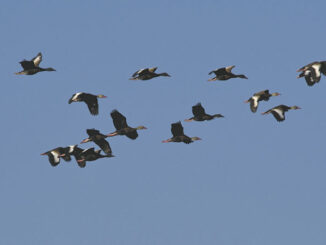
Fruge reported killing mostly gadwall. They also bagged quite a few green-winged teal, spoonbill and some scaup. They also killed a few pintail, mallards and black-bellied whistling ducks.
“We started off really hot with the green-winged teal, but in early December, we started shooting more blue-winged teal, which is weird because it’s been colder,” Fruge said. “One day in early December, we killed a bufflehead, a canvasback, a scaup, a pintail, a blue-winged teal, a green-winged teal and gadwall in a rice field. I’ve never killed that many different species in one day in a rice field before. The duck hunting in the Grand Chenier area has also been phenomenal. So far, it’s probably been the best season in the last four years.”
Early in the season, limited water concentrated ducks, but recent rains scattered them. Fortunately, no hurricanes hit Louisiana in 2025 so ducks find plenty of food.
Goose hunting started slowly, but the cold fronts that came through in December pushed more birds into Southwest Louisiana. Fruge and crew mostly target specklebelly geese, but also kill snow geese and blue geese.
Large numbers of teal in Southeast
In southeastern Louisiana, Capt. Ryan Lambert with Cajun Fishing Adventures (985-785-9833, www.cajunfishingadventures.com) hunts the marshes around Buras and near Venice. Here, tides largely determine hunting success. Extreme low tides can drain marsh ponds and strand boaters who don’t get to deeper water quickly enough. Hunters must watch the tides and plan accordingly, even if that means hunting in the middle of the day.
“For no wind and 80 degrees, we had a pretty good opener,” Lambert said. “We killed about 1,500 ducks so far. It’s about average, but we have more ducks this year.”
Lambert reported large numbers of both blue-winged and green-winged teal in his area. They also kill pintails, gadwalls, wigeon and other ducks. They kill a few mallards and an occasional snow goose.
“We have a lot of ducks in this area,” Lambert said. “When the wind blows, ducks come in from offshore. If the big ducks are flying, the hunters don’t shoot the teal. We are killing more pintails than gadwalls. We also have a lot of black-bellied whistling ducks.”
In January, biting north winds blow water out of the marshes. In late season, Lambert plans to hunt in larger bays to target diving ducks.
“Canvasbacks, redheads, ring-necked ducks and other divers are starting to show up. Last year, we killed quite a few goldeneyes. We’ve also been killing some scoters. We never killed any sea ducks until last season.”