Owners, trainers and expectations from both
Anybody that has waterfowl hunted knows how much the experience is enhanced with a good dog. They’re amazing to watch, recover more birds and love their job. They’re also great companions, hunting season or not.
When deciding to get a dog, there’s three options: buy one already trained, self-train it, or send it to a trainer. Trained dogs aren’t cheap, and rightly so, considering the cost of the puppy and the time and money invested. DIY training is certainly doable, it just takes commitment, time, money and especially patience, and I’ll admit it can be an intimidating task. This leaves sending the dog to a trainer, and luckily, Louisiana has plenty of excellent trainers.
A great way to find one is to ask who trained dogs you’ve enjoyed hunting with. Top-notch trainers fill their kennels via referrals. Many have waiting lists, so dog owners should start the selection process early, even before the puppy is home.
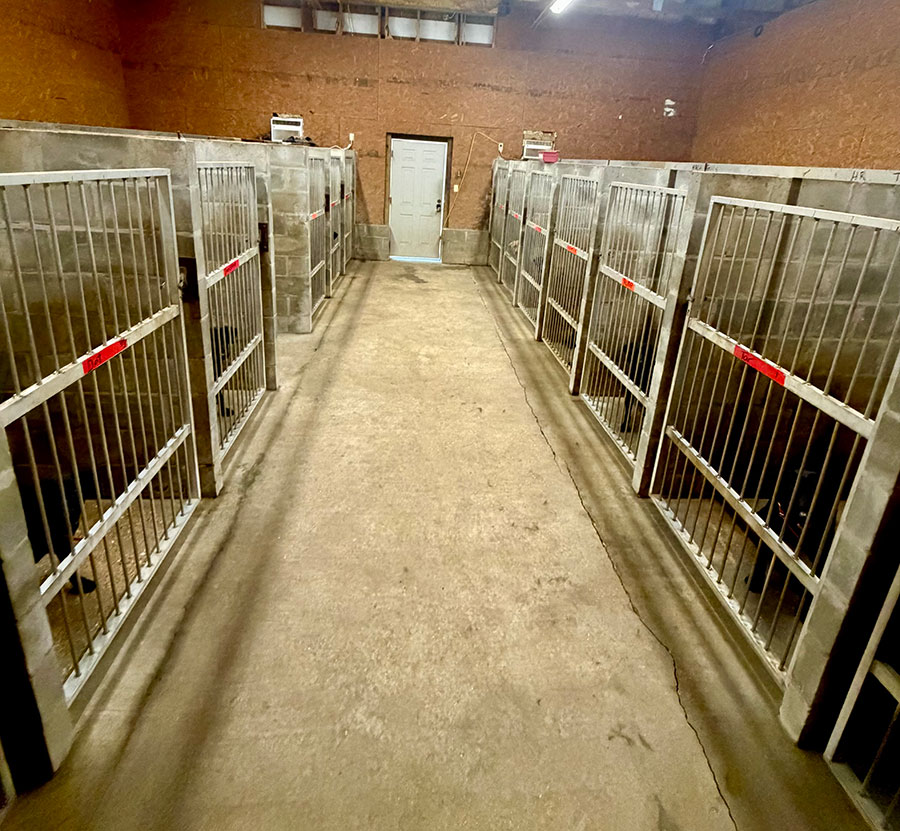
With some trainers in mind, make appointments to meet and tour the kennels. They should be clean, well-ventilated and secure. All dogs should be healthy and in good condition. If conditions aren’t met, move on.
A worthwhile investment
Once the right trainer is found, factors such as cost ($700-$900/month is common), training duration, fiscal responsibility (meds, injury/illness vet bills) should be agreed upon and in a contract. Ensure both parties are clear on the end game when training is complete. Future needs, along with extensive training on handling the dog, are extremely important as well.
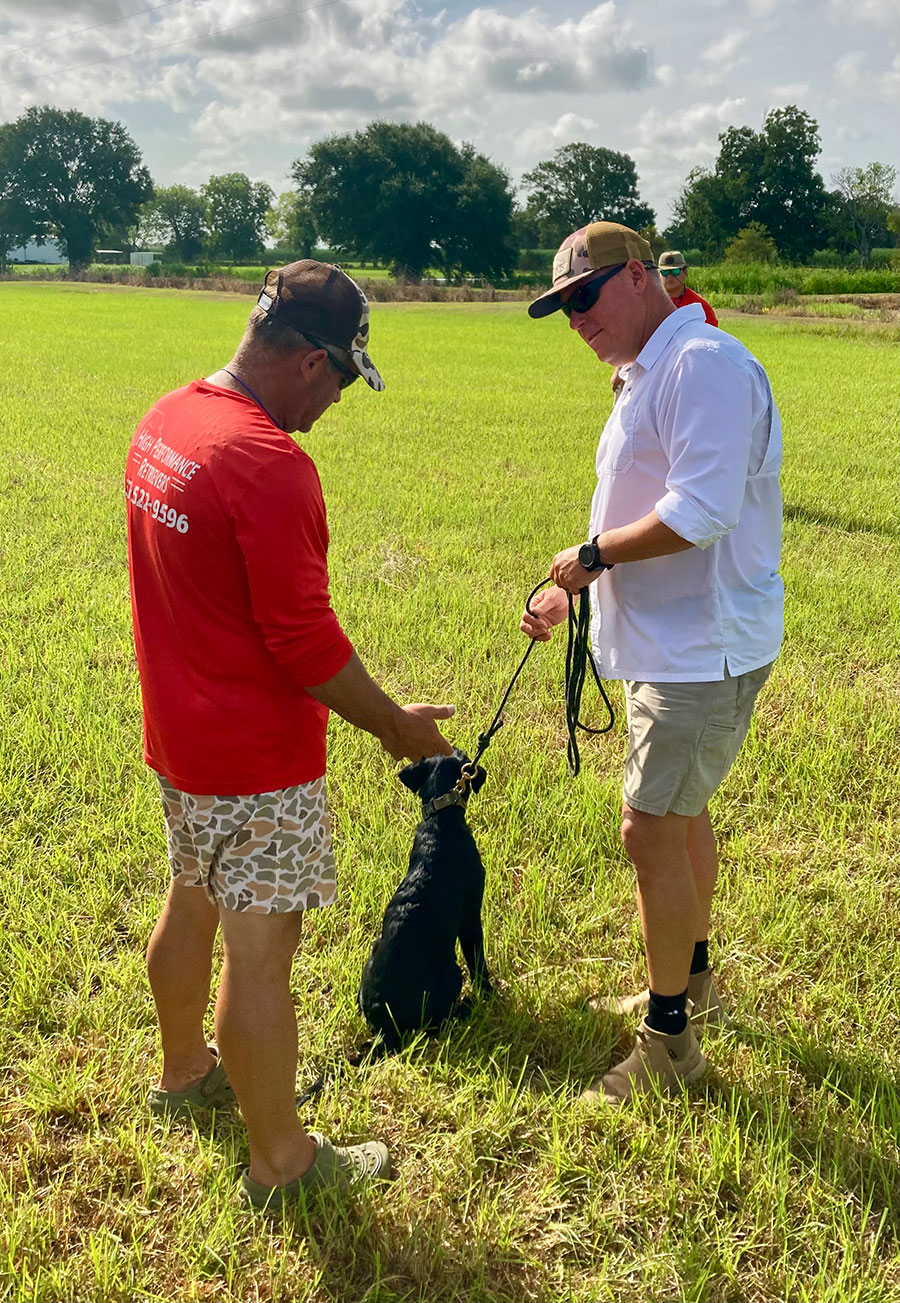
Trent Nugier, owner of High Performance Retrievers (HPR) in Maurice, La., has been at it for 31 years. He’s also the designer and marketer of Swamp Box Kennels. Currently, he has 36 dogs in training with a waiting list. I met Nugier and his client Dave Suter at HPR recently. Nugier has trained Suter’s current dogs and his puppy, Gibson, will be an HPR student, too.
Nugier was more than happy to give some insight and advice on preparing a puppy or young dog before it gets to the trainer. He also shared how building a solid foundation makes it easier on both student and teacher.
“My training program is the same regardless of if the client wants a dog just to hunt or also participate in hunt tests,” he said. “They come in around 6 months or so. Their permanent teeth are coming in so we work on basic obedience.”
Nugier said he really wants the owner to spend a lot of time socializing their puppy.
“I can tell when one walks into the kennel for the first time whether it has been socialized or not,” he said. “A dog with hackles raised and on edge didn’t get that socialization early on so we must do it. It makes things harder, and sad to say; some dogs can’t recover, so exposure to dogs, environments, sights, smells and sounds pays off.”
Preparing your pup
Nugier stressed that crate training is important since the dog will be kenneled and he trains at several different places.
“I also want the dog ‘leash broke’ and ‘table steady’ when we get it,” he said. “It makes force fetch and other tasks a lot easier.”
Along with what Nugier mentioned, Suter’s input as a client was also solid.
“We work on fetch but keep it fun and short to end on a good note,” he said. “We also work to develop prey drive with clipped pigeons, duck wings or other tools to get them excited.”
Nugier emphasized that communication beforehand is extremely important.
“I want my clients to call me with questions or updates so we can keep the dog on the right track before I get it,” he said. “I also want to know how the dog is doing after training and back home.”
Nugier has several clients that have “graduated” to continue their dog’s training once Nugier turns them back over. Suter is one of them who trains with Nugier regularly with his older dogs and will continue with Gibson.
When ready, find the right trainer, get on the same page, start building that foundation and look forward to some great hunts in the future!
Trent Nugier can be reached at 337-522-9596, trent_nugier@yahoo.com and the HPR Facebook page.