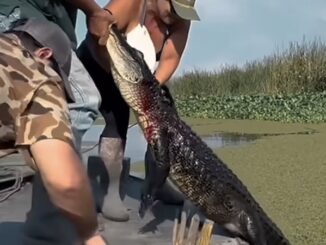
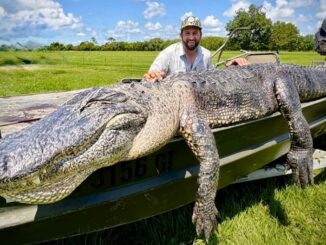
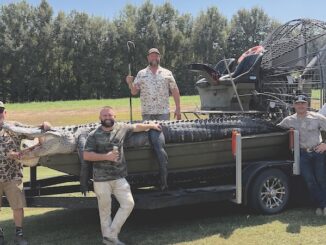
Ronnie Adams, Jr. of Violet grew up hunting and fishing the swamps, marshes and bayous of St. Bernard Parish and never dreamed of becoming a television star.
Instead, the 51-year-old wanted to play professional football. While playing the second to last game of his senior season at the University of Southwestern Louisiana, now the University of Louisiana at Lafayette, Adams suffered a career-ending injury. Therefore, he became a history and physical education teacher and coach before returning to his commercial fisherman lifestyle.
Then, a phone call changed his life forever. A longtime friend called Adams and said the Swamp People television show was looking for new cast members. Brian Catalina, the show’s executive producer, flew to Louisiana to meet with Adams and said he would make a great new addition to the show. A couple months later, with a new alligator season about to start, Adams signed a contract. He first appeared on the show during the 2019 season.
“I never thought I’d be a TV star, but my family always knew it was my calling because I was always such an actor growing up,” Adams quipped.
Adams receives more than 400 alligator tags each year. To date, he brought in two alligators exceeding 13 feet long. Whether on television or an everyday individual, catching alligators takes considerable work. Much of that work begins before the season starts.
Getting your gear ready
Anyone who has hunted alligators in Louisiana or watched Swamp People knows that Louisiana sportsmen catch alligators on lines with baited hooks. Before the season, hunters must prepare their lines and replace any worn out tackle.
“It takes a lot to prepare for alligator season,” Adams said. “Before setting lines, hunters need to make lines. I want to make sure my gear is in tiptop order and ready to go. I use 14/0 steel hooks on 1,200-pound test braided nylon line.”
Each numbered tag correlates to a specific area. Before setting lines, sportsmen must find the alligators and good places to hang lines within that designated area.
“Scouting is the number one thing to do before the season begins,” Adams said. “I’m blessed to live in St. Bernard Parish and fish here almost every day, so I’m always scouting for alligators. Occasionally, I’ll get a new piece of property to hunt. I’ll scout that property to see where the alligators are.”
Hunters need something to keep bait suspended over the water. In places with abundant trees, an overhanging branch makes an excellent place to tie a line. In marshes with few trees, like in much of St. Bernard Parish, sportsmen must bring in something else.
“People don’t want to put a line up in spots with too many underwater roots because alligators would get tangled, making them very difficult to get out,” Adams cautioned. “Even in areas with trees, I use 20-foot cane poles. I tie good knots at the bottom of each pole and shove it 5 to 6 feet into the ground. Even the biggest alligator cannot pull that pole out of the mud because it’s locked in.”
Stinky chicken
For bait, most hunters use chicken. The big reptiles prefer “ripe” meat over fresh servings. About four days before needed, let frozen chickens thaw until they start smelling enticing, at least to an alligator!
“Alligators like ripe meat with a stinky, raunchy smell,” Adams said. “If we keep a bait on a line long enough, fire ants might find it and come down the line to eat the bait.”
One would think ants wouldn’t bother a massive toothy reptile with a thick hide that survived the extinction of its dinosaur relatives. However, they do.
“I’ve been fishing for alligators since my grandpa took me when I was 5 or 6 years old,” Adams said. “He always said that if the bait had fire ants on it, move it to another spot. An alligator will not grab a bait with fire ants on it.”
Sportsmen preparing for the season should also hone their marksmanship skills and check their weapons. Louisiana alligator hunters can use various firearms and archery equipment, but not shotguns, to kill alligators. Adams prefers a .22 magnum rifle.
For more information on Louisiana alligator season dates and other regulations, see www.wlf.louisiana.gov/page/alligator-hunting.