As we were motoring to our next fishing spot, we ran by an old plywood chunk floating on the surface. The captain noticed a brown splotch lurking just beneath it. He circled wide upwind and came back for a second glance.
A stiff breeze roaring across this river delta made visibility challenging, but also helped to mask any sounds we made. I baited a popping-cork rig with a live shrimp. As we coasted toward the floating object, I made a long cast propelled by the tailwind. I didn’t want the cork to splash next to the plywood, so I aimed for a spot about 10 feet upwind.
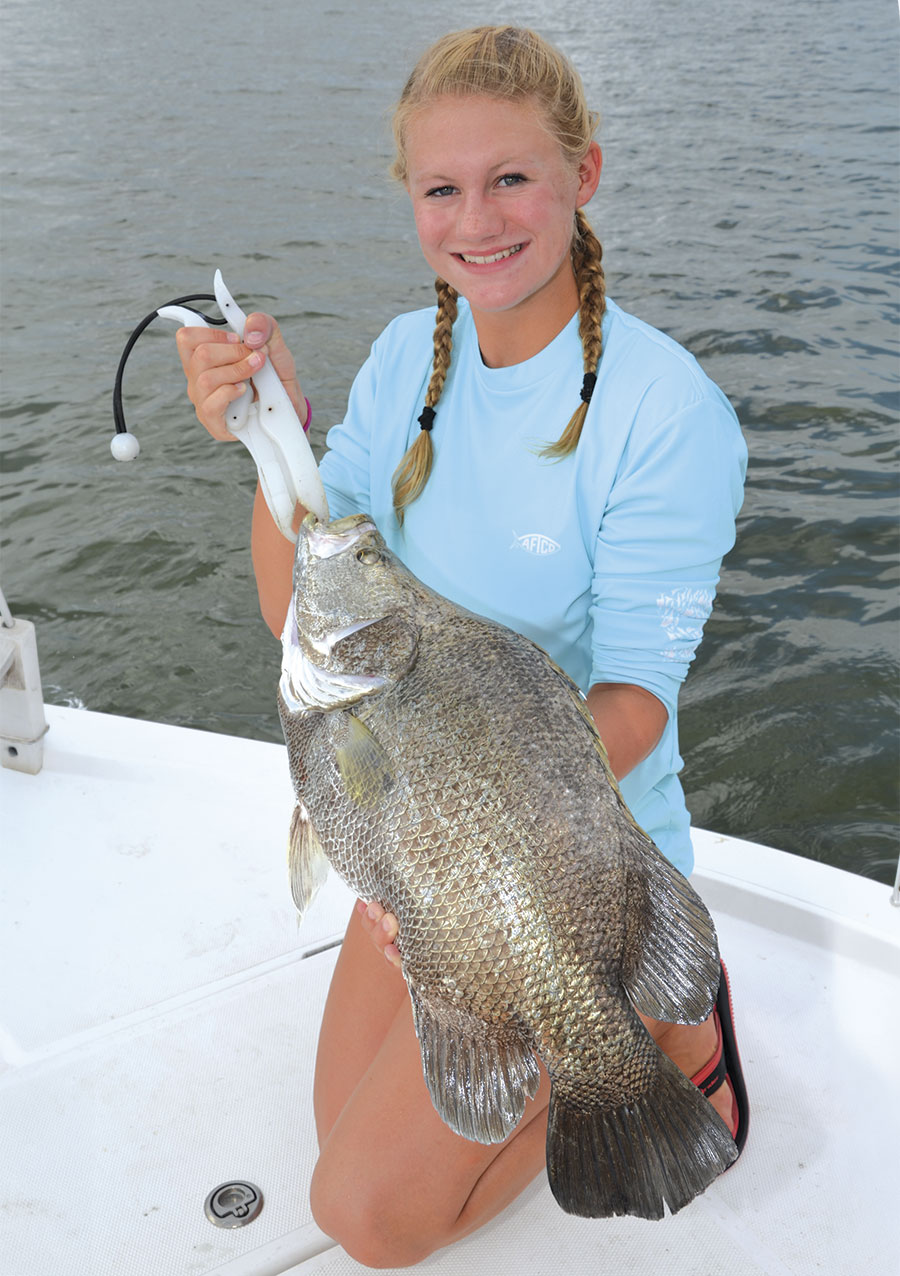
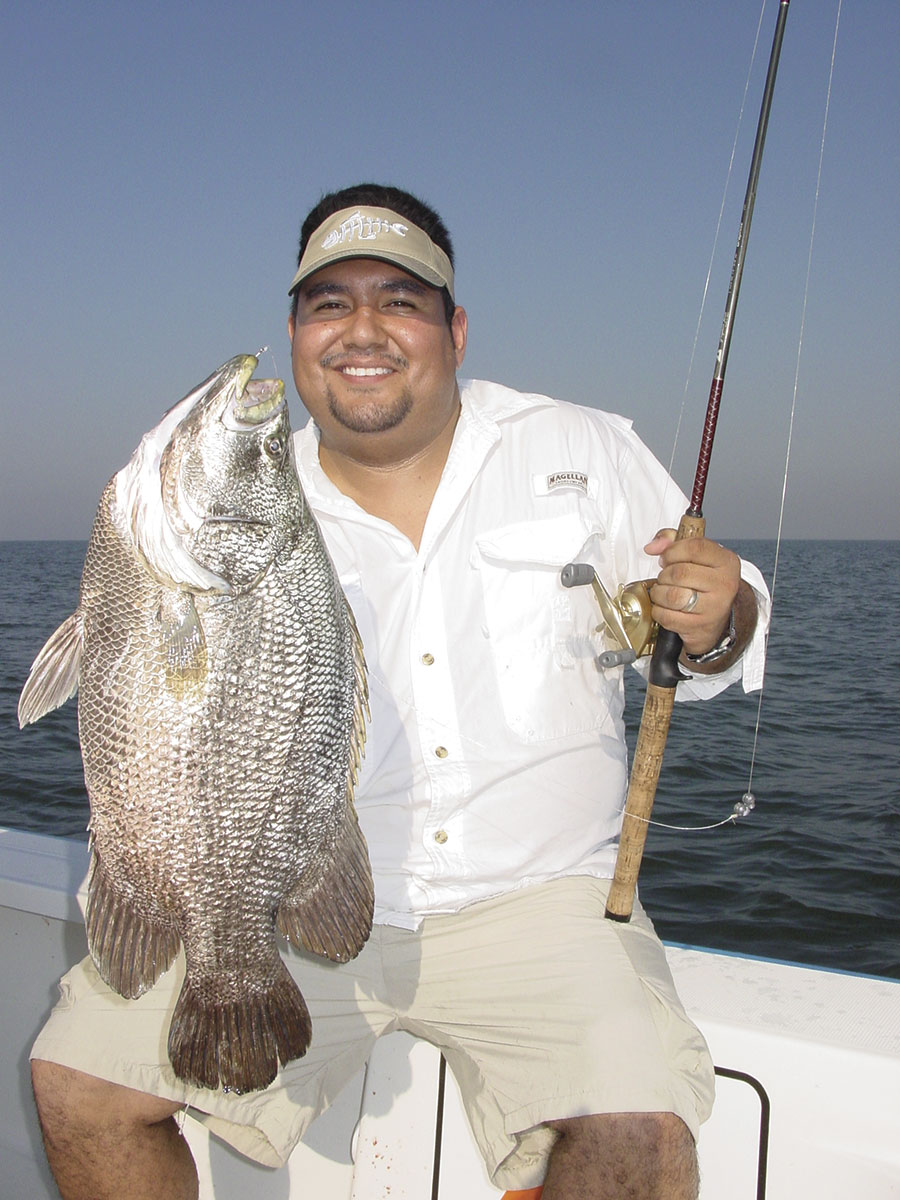
Without flipping the spinning reel bail, I let out slack. As the breeze pushed the cork toward the floater, I used the rod to maneuver the rig so it drifted next to the wood. Suddenly, the cork vanished. Milliseconds later, the circle hook connected. Line ripped from the screeching reel. After an invigorating fight, the captain netted what looked like a massive bluegill on bad steroids sporting three tails.
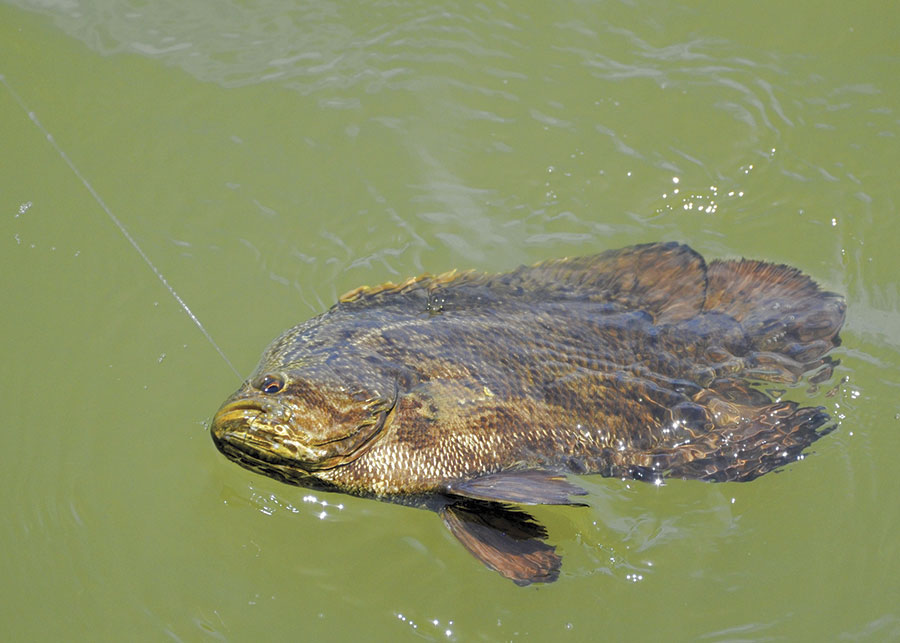
Sometimes called blackfish, tripletail earned their moniker because their dorsal, anal and tail fins resemble three tails. These odd fish occur throughout the entire Gulf. They might appear 100 miles offshore, in nearshore waters or far up the estuaries.
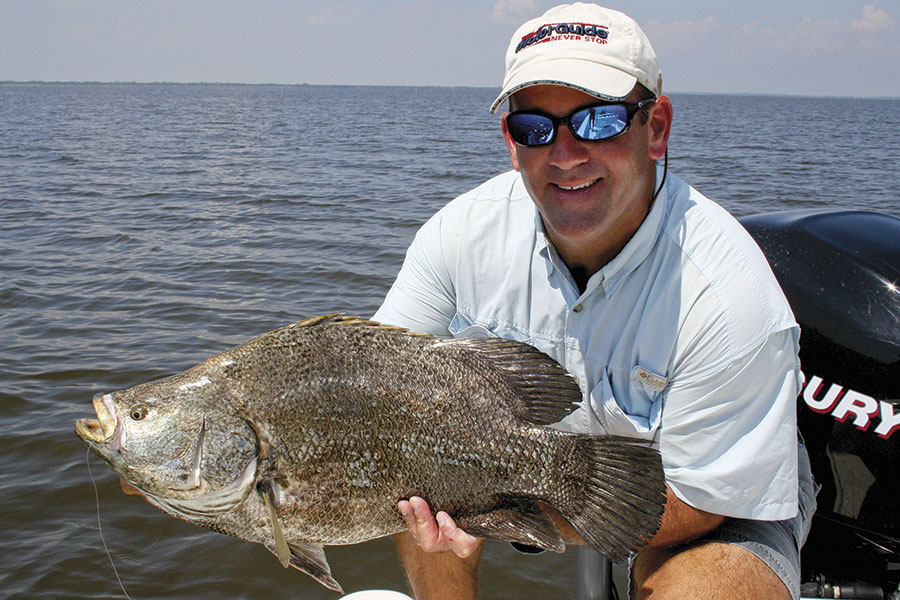
“Tripletail are opportunistic ambush predators that feed mainly on small fish, crustaceans and mollusks,” said Jason Adriance, the Louisiana Department of Wildlife and Fisheries Finfish Program Manager. “In Louisiana, we do see them inside the estuaries, but they are more common in the larger sounds.”
Luck, time and fuel
These hard-fighting powerhouses provide incredibly exciting action and great tablefare. Most tripletail weigh 2 to 15 pounds, but they can exceed 40 pounds. The Louisiana state record weighed 39.50 pounds. In Mississippi, the top fish dropped the scales to 37.75 pounds.
“The three essential elements for catching tripletail are luck, time and fuel,” said Sonny Schindler with Shore Thing Fishing Charters (228-342-2206, www.shorethingcharters.com) in Bay St. Louis, Miss. “The biggest tripletail ever caught by our guide service weighed more than 27 pounds. My personal best weighed 24.50 pounds.”
Few people leave the dock intentionally trying to catch tripletail, but nobody wants to pass one up if they stumble upon it. Anglers typically catch them as targets of opportunity. People could see dozens one day, then nothing for weeks.
“Fishing for tripletail is what I love to do on my day off from guiding,” said Erik Rue of Calcasieu Charter Service (337-598-4700, calcasieucharters.com) in Lake Charles. “They are a ‘now you see them, now you don’t’ fish. We must see them to catch them. It’s almost like hunting. It’s a challenge to find them, but they are some of the best tasting fish anywhere.”
Tripletail generally start showing up along the northern Gulf Coast in late March or April once water temperatures reach about 73 degrees. They disappear in the fall when the water cools.
“The earliest I’ve ever seen a tripletail off Mississippi is April 1,” Schindler said. “The latest was early December. July is a great time to catch them because tripletail like warm water, but I’ve seen many in October before the cold fronts hit. Late September to early October is probably the best time to catch them.”
Look for floating debris
Tripletail love to suspend under floating objects. They drift along with logs, old crates or any other flotsam. Sometimes, they even swim under giant whale sharks or manta rays or hover beneath something as small as a drink can. Occasionally, they just sun themselves on the surface in open water. When running the boat, watch for dark objects under anything that floats. Polarized sunglasses immeasurably help people spot tripletail better.
“We keep our eyes peeled whenever we’re moving the boat,” Rue said. “We look under anything floating, like a bucket, a log or an old pallet, to see if a tripletail lurks there. If we see one, we shut down and ease up on it. In the summer, each piece of flotsam could have something hovering under it. In July, we frequently find tripletail just free floating.”
After spotting something interesting under an object, stealthily “stalk” the quarry. Whenever possible, approach from upwind. Let the breeze push the boat into casting range. Use the trolling motor sparingly, only for directional control. Avoid making unnecessary noises or vibrations. Make long casts with the wind. Tripletail habitually face into the current to spot food.
Long weed lines also make great places to find tripletail. Thick vegetation patches normally hold tiny fish, shrimp, crabs and other morsels. Look for dark moving spots in the water, baitfish or shrimp jumping, perhaps fins protruding from the surface.
“If we find a grass patch loaded with bait and activity, that’s where tripletail will be,” Rue said. “We only get a few shots at them so we must make each one count. Sometimes, we get lucky in the right spot. When we’re fishing the surf zone along the beaches for trout in the summer, we often see tripletail floating past the boat not under anything.”
Places to find tripletail
Waters outside river deltas make great places to “hunt” tripletail. Large rivers carry tremendous loads of floating debris. The biggest, the Mississippi River Delta, probably offers the best place along the northern Gulf Coast to find tripletail. People might also spot them outside the Sabine, Calcasieu, Atchafalaya, Pearl and Pascagoula rivers. They even venture into Lakes Borgne and Pontchartrain as well as Biloxi Bay.
“We’re spoiled here in the Mississippi River Delta when it comes to tripletail fishing,” said Mike Frenette with Redfish Lodge of Louisiana (504-782-0924, Laredfish.com) out of Venice Marina. “This year, we started seeing large tripletail in early April. They really get aggressive in July and we catch some in the 10- to 25-pound range.”
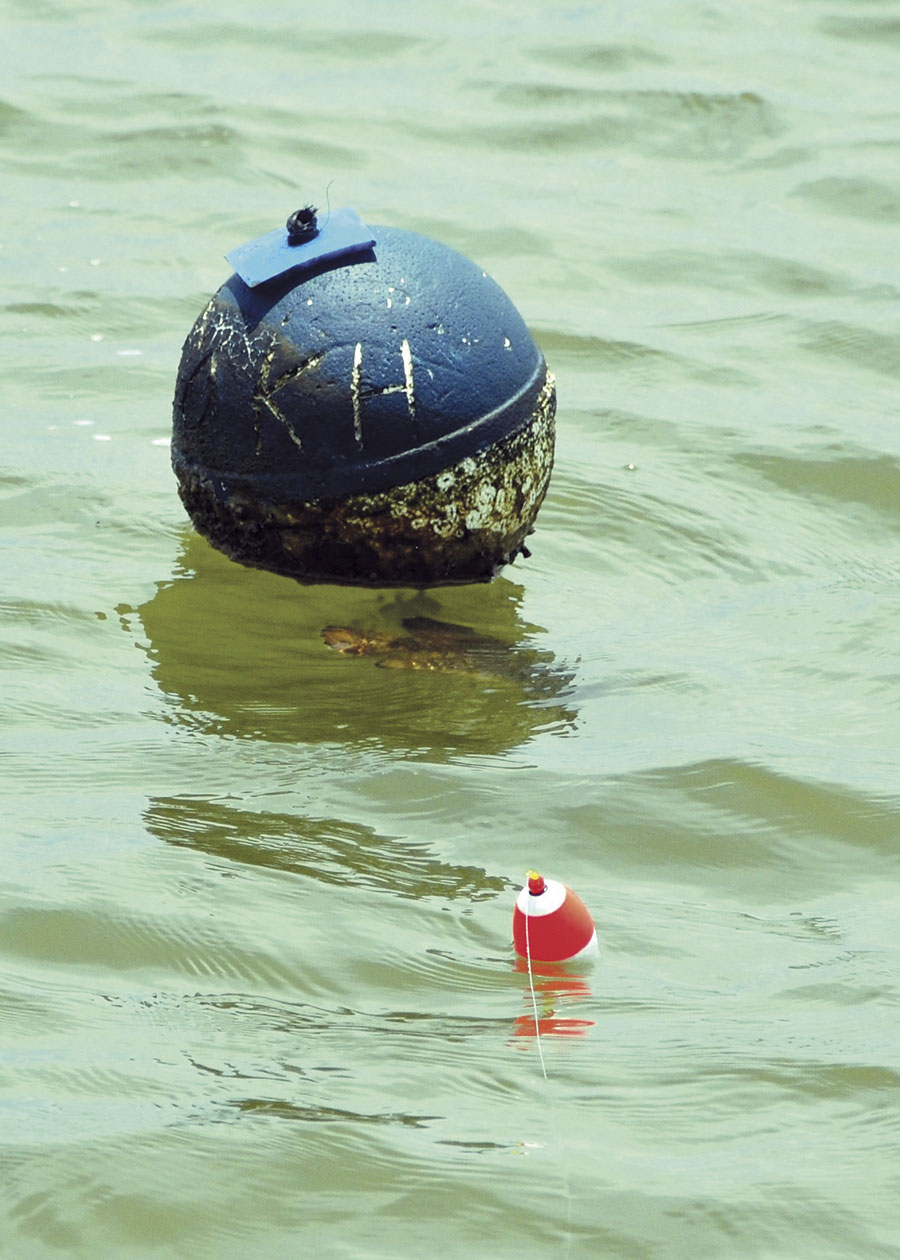
Tripletail also hang around stationary objects such as buoys, channel markers, wellheads, petroleum platform legs, docks and bridge pilings or other structures. Many anglers “run the crab lines.” Crabbers mark their traps with floats. Lines could stretch for miles.
“The older and nastier the object, the longer it’s been in the water and the better will be our probability of seeing a tripletail under it,” Schindler said. “When stuff sits in the water a long time, things grow on it. Little shrimp, crabs, minnows and other creatures get around it. It’s almost like a mini floating reef.”
The top baits
By far, live shrimp lead the preferred tripletail temptations. The bigger the shrimp, the better. Fresh dead shrimp ranks second. Live finger mullets and small croakers also work exceedingly well. Anglers could also tempt tripletail with cocahoe minnows, crab pieces and other natural selections.
“The best bait for tripletail is a big frisky live shrimp,” Schindler said. “We fish it under a Boat Monkey cork (boatmonkeyfloat.com). The next best bait is a fresh dead shrimp, also fished under a cork. If fish are right on the surface, dangle the bait a foot under the cork.”
When casting, try not to spook the fish. Don’t drop the bait on its head. Avoid hitting the buoy or other floating objects. With live bait, don’t pop the cork. The shrimp alone will provide enough enticement. If nothing takes the bait, pop the cork a couple times.
Although tripletail prefer natural baits, they do hit artificials. Realistic soft-plastic shrimp top the best artificial temptations. Fish them under corks or on free lines. Without a cork, use just enough weight to enable casting. Slowly twitch the shrimp past a fish’s nose.
“I like 4- to 6-inch soft plastics,” Frenette said. “Strike King makes a great shrimp called a Tidal Shrimp that creates realistic movement. I always have one rigged worm style with no weight. I let it slowly sink. Tripletail usually hit while it’s suspending.”
Tripletail might also hit paddle-tailed swimbaits and other soft plastics. Scent-enriched baits such as Gulp! tend to produce more strikes than ordinary plastic ones. With artificials, always make a great cast and first presentation. You might not get a second chance.
Fly fishing
Many fly anglers love to tempt tripletail. The fish might gulp any feathery creations that mimic shrimp, small fish or tiny crabs. Good fly casters could take multiple shots at the same fish.
“Fly anglers can do well if they are very proficient and accurate with their casting,” Schindler said. “We use shrimp patterns on slow-sinking tippets with slow-sinking line. Crab patterns also work. Catching tripletail on fly tackle is great fun.”
Anglers commonly spot tripletail hanging near the surface, but sometimes they disappear. The fish didn’t necessarily leave the area. Try fishing a slip-cork rig. With a slip cork, anglers can vertically fish at designated depths. Line slips through the float until it hits a stopper. Experiment with different depths to determine what works best.
If nothing happens, remember that spot or object. Leave for a while and return later to try again. Tripletail regularly stay around objects they like.
When heading to your favorite honey hole, returning to port or just moving around, watch for any targets of opportunity. The right cast could make the day.