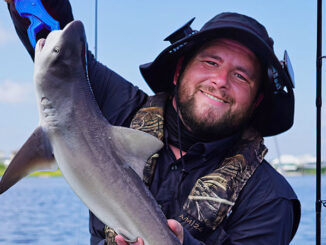
There is no argument that the top three fish for kayak anglers in Louisiana are speckled trout, redfish and bass. However, the state’s fisheries provide opportunities for a wide variety of other species, be it fresh, brackish, or salty waters.
On the freshwater side, available species range from many different panfish, several species of catfish, gar, freshwater drum, bowfin (aka choupique) and in some areas, exotics such as snakehead. Many of these fish are caught incidentally while pursuing bass, but all can be somewhat intentionally targeted by adapting techniques and lures/bait.
Freshwater catfish are also becoming more widespread in brackish coastal waters and are more frequently showing up in the bags of anglers pursuing trout and reds. While more commonly caught using a variety of natural baits, many catfish are surprisingly caught on lures.
Many believe catfish simply grub around on the bottom and are not aggressive feeders. However, this has been proven not to be the case. They are regularly caught chasing down spinnerbaits, Rat-L-Traps and under popping corks. There have even been a few rare topwater catches. Of course, live or other natural baits are always best for catfish, but scented artificial lures like Berkley Gulp also work well. Good fighters and tasty on the table, catfish make a great fish to specifically pursue in the kayak.
Other freshwater options
While some do eat them, bowfin are great fighters, but opinions on their food value are mixed. Many a kayak angler has been surprised (and disappointed) when what they thought was a good bass on their line turns out to be a hard battling bowfin. Again, while most are ancillary catches, fishing backwater areas where the water may be dirty or contain low oxygen ups the odds of specifically targeting bowfin.
In some areas of the state, the invasive snakehead is increasing its range. Similar in appearance to bowfin, snakeheads are fierce fighters. Anglers cooking one up are in for a delicious surprise. They have a penchant for frog-type lures, but can also be caught on a variety of natural or artificial baits. Both bowfin and snakeheads have a mouth full of teeth, so handle with care and do not make the mistake of trying to lip-grip one like a bass.
Some of these freshwater species are increasingly being caught by coastal kayak anglers where their range is spreading to areas once considered saltwater. These areas are now more brackish due to an influx of freshwater, mainly related to coastal restoration and hurricane restoration projects.
Shark safety
On the brackish/saltwater side, of course trout and redfish are the mainstay, followed by flounder and black drum. However, between the coastal and near shore Gulf areas, the available species is nearly endless. Croaker, jack crevalle, sharks, snapper, cobia, tripletail, gafftopsail catfish, Spanish mackerel, sheepshead, white trout and more. Some are wanted more for sport than food, but all have made their way to the gunnels of kayak anglers across the coast.
Catching sharks in a kayak is a pure adrenaline rush, but one that comes with a few extra precautions. Large or small, sharks are dangerous, especially if attempting to bring them aboard the tight confines of a kayak. Of course, the best practice is to enjoy the fight and once the shark is brought yak side to simply cut the hook off and let it swim away with no physical contact. If you have a legal shark that you want to keep, it should always be dispatched before bringing it onboard the kayak. A few good whacks from a fish bat quickly dispatches the fish for further, safe handling.

Sharks are hard fighters, make great table fare if properly handled and recent regulation changes for state waters have greatly increased the opportunity for kayak angles to keep certain sharks. The regulations for two of the most commonly caught sharks, bull and blacktip, allow anglers to now keep any size and quantity of these two species. Other shark regulations vary and are much stricter. So, if unsure what type you’ve caught and the appropriate regulations, it is best just to release it.
Battling with a jack
While some anglers claim to eat jack crevalle, they are generally not kept for food purposes and are released after what is sure to be an epic kayak battle. Jacks are mingled in many areas commonly fished for trout and redfish. They are often unexpectedly caught, especially in the hotter months. There are not many tougher fish to fight inshore from a kayak than a brute jack crevalle, and kayak anglers are in for a real treat when one ends up on their line. Jacks are often found in large schools and can be specifically targeted with big topwater and large silver spoons.
Snapper, cobia and tripletail are not as easy to target for Louisiana kayak anglers, but can be found around some of the larger coastal passes and nearer oil and gas platforms. Venturing to unprotected waters off the coast dictates extra precautions, of which weather is at the top of the list. While thunderstorms can come out of nowhere, it is best to fish with a group and only on days that are predicted to have stable, calm weather. There are some increased risks chasing these species, but the rewards are great battles and delicious meals.
None of these other species will likely ever replace trout, redfish and bass as the primary targets of Louisiana kayak anglers. However, the vast bounty that is Louisiana fishing provides ample opportunities to catch a wide variety of these less popular, but equally fun species. Getting out of your comfort zone to learn to specifically target some of these is also quite rewarding.