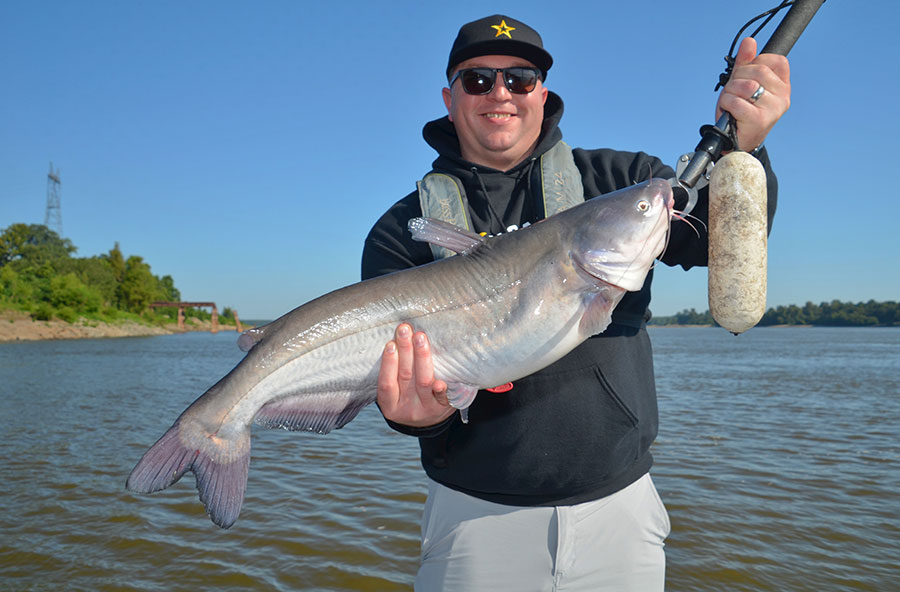
Even the coldest days could bring hot catfish action
Foggy wisps spiraled up from the chilled water as the boat slowly drifted backward in the current. Suddenly, a line began moving against the flow! The angler grabbed the heavy rod, cranked up the slack and set the hook on another frigid finny fighter.
Most anglers probably fish for catfish in the spring or summer, but people can catch huge whiskerfish all year long. Catching lethargic catfish in cold water usually means finding them first. Cool cats won’t move far from a good spot.
“It’s tough to go on the water in freezing weather, but the winter can produce some of the best catfish catches all year,” said Joey Pounders, a professional catfish angler from Caledonia, Miss. “We fish the same techniques all year long. Fish must eat all year long. When it’s hungry enough, a catfish will bite.”
When the water turns cold, cats frequently seek the deepest holes they can find. Deep water remains more stable all year long. Once they find a comfortable spot, they won’t move far from their lair, but they might snatch something drifting irresistibly close to them.
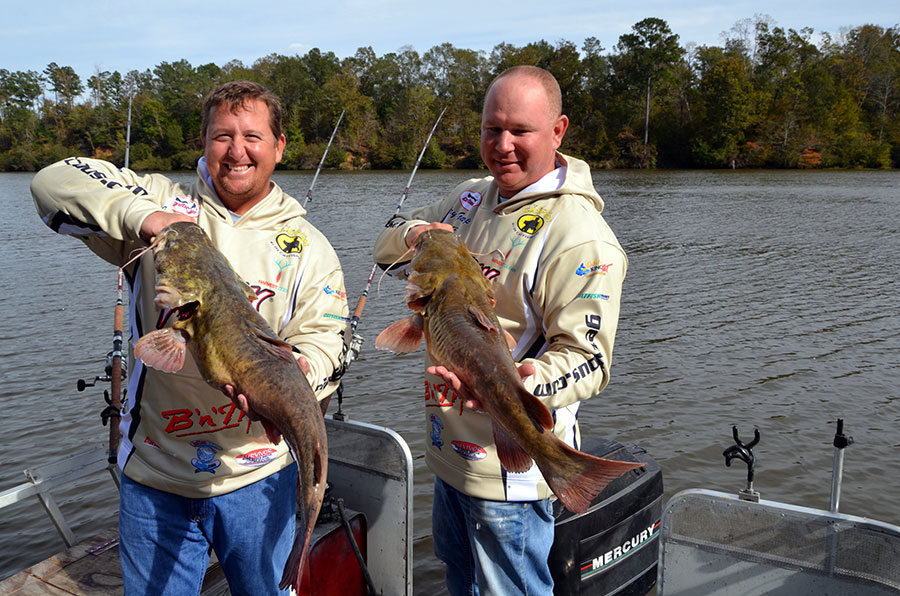
“In the winter, catfish are sluggish,” said Keith Powers, a tournament catfish angler from Tallulah, La. “Their metabolism slows and they get lethargic in cooler temperatures. Blues and flatheads act similar in the winter, but blues are more active. Occasionally, we’ll catch blues and flatheads in the same places at the same time.”
Cover water by drifting
When fishing rivers with current, like the Mississippi, Red or Atchafalaya, try drifting to find the fish. It takes a long time for a catfish to reach 50 pounds and even longer to top 100 pounds. The more territory a person can cover, the more likely a bait will pass by the whiskers of a river monster.
“The Mississippi River can be a great place to fish for big catfish,” said David Magness with Cat’n Aroun’ Guide Service (901-356-1008, catnarounguideservice.com) in Hernando, Miss. “It has a powerful current, but in other places it can be as gentle as a stream. If we can find treetops in slack current, that’s the place to find big catfish.”
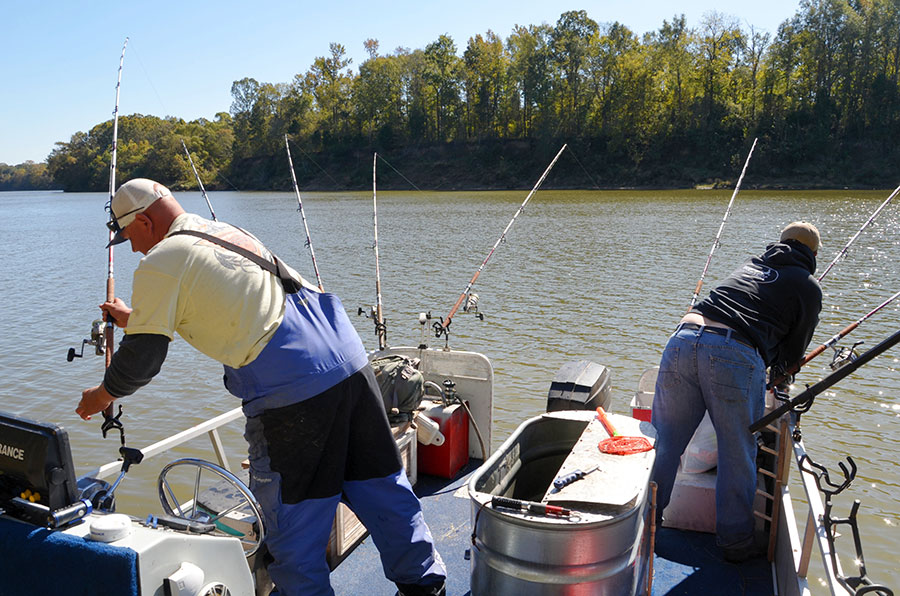
Use a three-way rig. Off the swivel, attach a bait leader about 15 to 30 inches long tipped with a circle hook. Use longer leaders with live bait to allow fish to swim more freely. Rig a drop line about 10 to 15 inches long for the sinker. To keep the bait off the bottom, add a cork float. Cork looks more natural drifting in the water than a brightly colored plastic bobber.
“In the winter, we usually downsize our rigs and hooks,” Powers said. “We usually fish with a 4/0 hook during the winter. In places known for really big fish, we go from a 4/0 to an 8/0 hook. If I mark some bigger fish on my sonar, we might put on a bigger hook with a bigger bait.”
Live or cut fish
Bait each line with something different to see what fish want that day. Use the freshest baits possible. Fortunately, chilly weather keeps baits fresher longer. A blue catfish might eat just about anything including shrimp, crawfish, worms, minnows and many other morsels.
However, the biggest blues prefer fish, live or chunked. They savor skipjack herring, bream or shad. Many catfish anglers just use the head and gut section of a baitfish with juices oozing out. In the winter, downside baits because lethargic cold-blooded fish typically don’t eat as much in cold water.
“We downsize the bait in the winter because sometimes fish just want a snack and they are not hungry enough for a huge chunk of bait,” Powers said. “We might use cut skipjack or shad about 1 to 1.5 inches big, even for giant fish. We have caught 40- to 50-pound catfish on 4/0 hooks and 1-inch baits. We caught a 92-pounder in late winter on a piece of fresh cut shad about that size.”
Blue cats can tolerate more salinity than other freshwater catfish. They might feed on shrimp next to redfish. In coastal rivers, mullets make excellent catfish temptations for blues and flatheads.
Rocks or woody cover
Big blues like deep water, but even on the most frigid days, sunshine beating down on the surface warms the top layer a few degrees. Shallow muddy water warms quicker than clear water because all the suspended particles absorb solar energy. In the winter, catfish seek that warmer water, especially at midday.
Pilings, trees, stumps, rocks, riprap and other hard objects protruding above the surface also warm the waters around them. These objects absorb solar heat and radiate that warmth down through the water column. Metal, concrete and rock absorbs more solar heat than wet wood. Big fish frequently get right up against objects. Just a few degrees warmer could make a huge difference to a cold-blooded catfish on a frosty day.
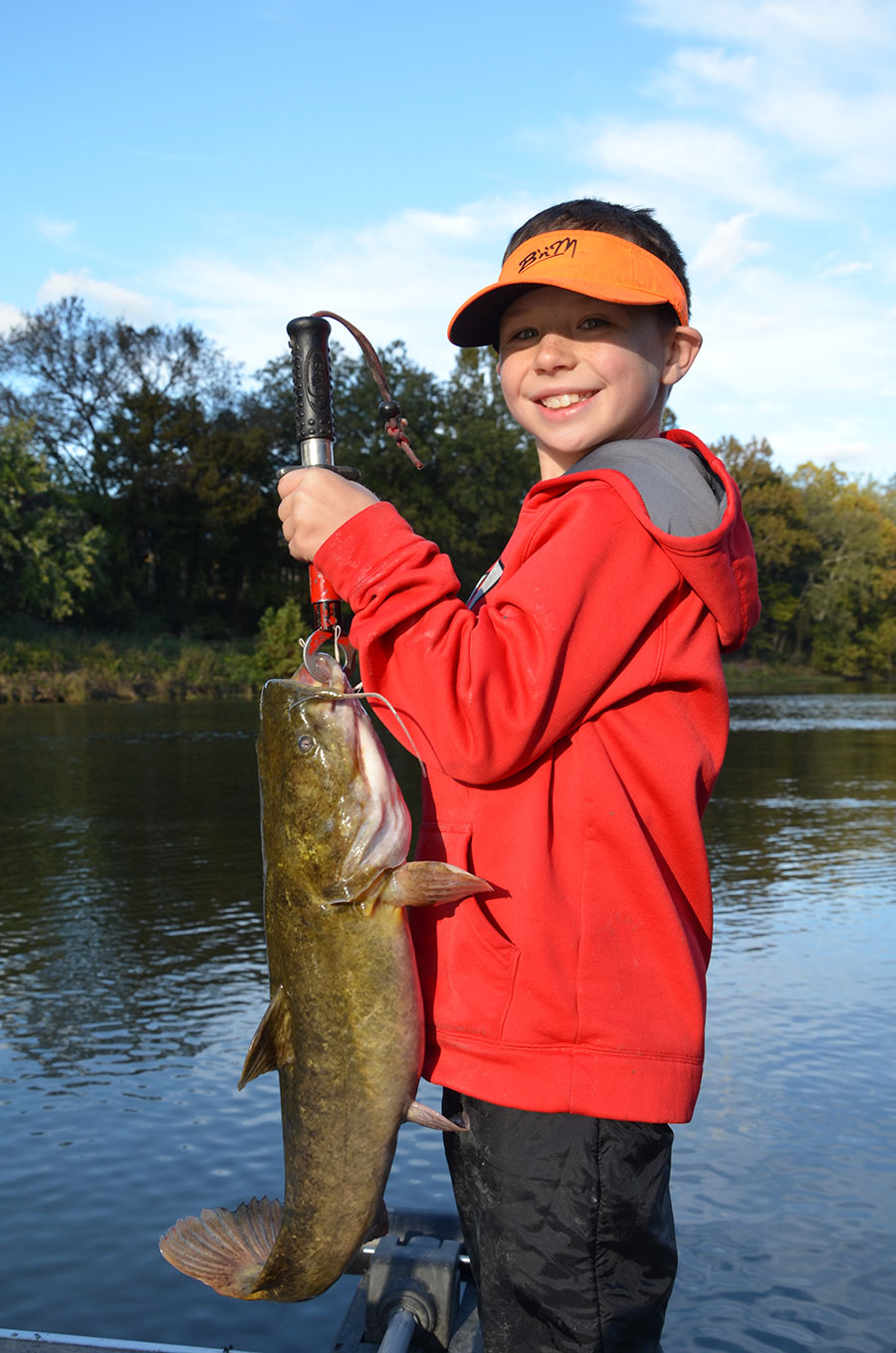
When looking for winter flatheads, scan deep channels and drop-offs with electronics. Flatheads normally stay around rocks or woody cover, such as logjams, submerged treetops, stump fields or holes near washed out riverbanks. Look for cover near steep depth changes so fish rise and descend in the water column.
All year long, flatheads spend more time in shallower water than blues. With their excellent mottled camouflage, flatheads blend in with wood and ambush unsuspecting shad, mullets, bullheads, even other catfish. With its cavernous mouth, a big flathead might gulp anything fresh and preferably still squirming.
“During the winter, shad don’t die off too quickly, so we can keep them in the tank all day and they stay lively,” Pounders said. “If the water is not moving, I fish 35 to 40 feet deep at most. In moving water, I might fish as shallow as 10 to 12 feet deep. I want to find some shelves against the bank or other structure that normally doesn’t have too much current, but I like a little current.”
A squirming baitfish
Flatheads can’t resist a struggling bluegill. Anglers can use bluegill for bait if they catch them legally on a hook and line from the same waterbody as the catfish. Also, anglers cannot keep more than the daily limit each day.
Strip baits entice both blues and flatheads because they look alive when rigged properly. Fillet off a baitfish side. Leave the ribcage intact. Drive a circle hook through the ribcage. In current, the trailing strip undulates like a live bait while oozing tempting juices.
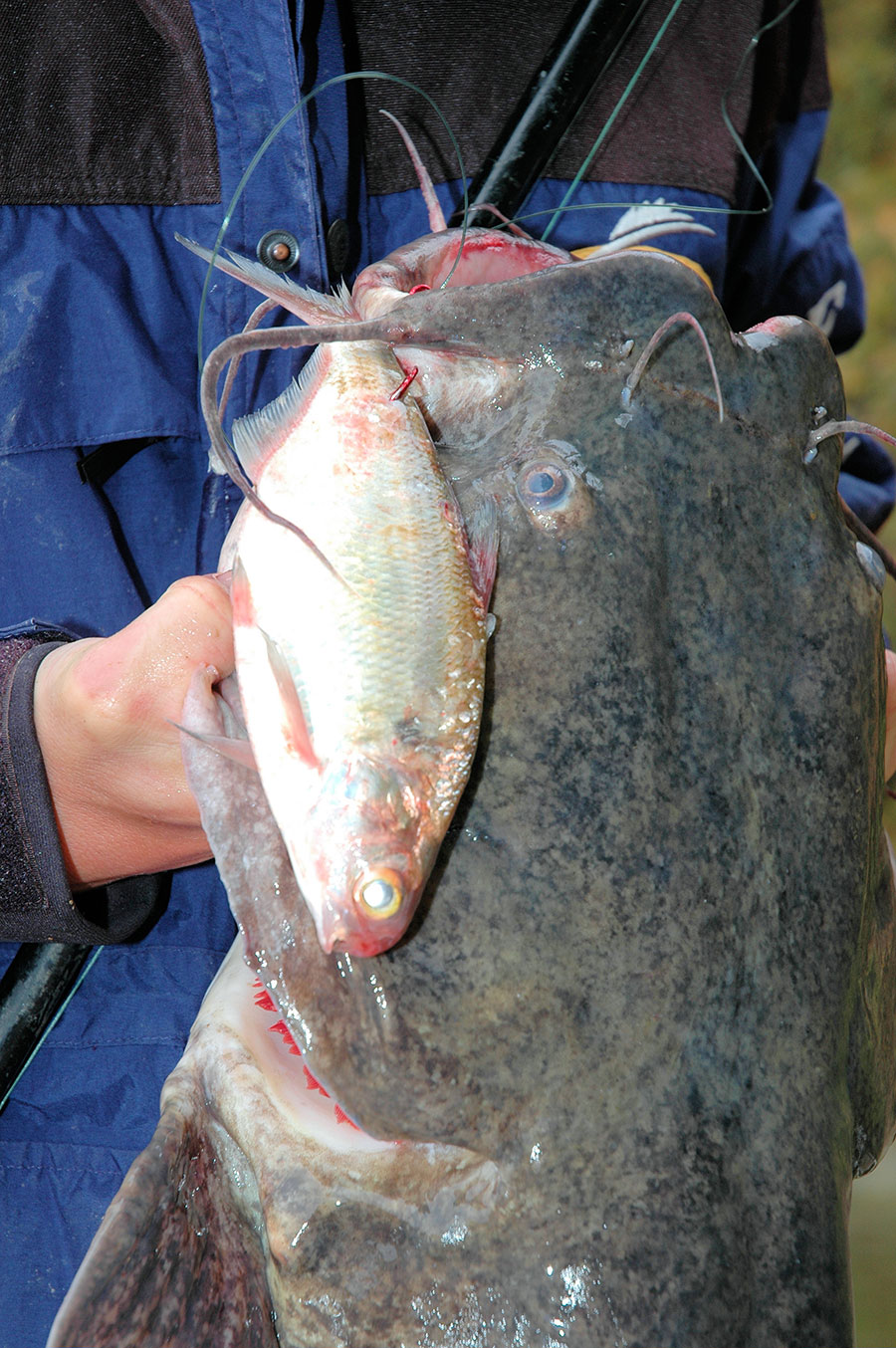
“We normally use live shad about 6 to 8 inches long,” Pounders said. “If I can find river redhorse suckers, that’s a good bait. I also like to use small buffalo, about as big as the palm of my hand. One time, I held a big flathead in a tank overnight to take some photos the next day. It threw up several buffalo. I found out that flatheads really go for them.”
Buffalo and shad commonly gather in the same areas. Hook a squirming baitfish on a modified Carolina-rig. Attach a small slip sinker to a 2- to 3-foot leader. Hook the fish through the lips, tail or under the dorsal fin and let it swim freely near structure. Halfway up the leader, add a cork to keep the bait off the bottom. For flatheads, put the bait right against the thickest cover or slightly upstream.
Never set the hook too soon. To swallow another fish, a catfish must reposition it in its mouth so it can swallow the morsel head first so the fins fold down. This keeps the predator from choking itself.
“Fishing for big flatheads takes patience,” Pounders said. “I don’t want the fish looking toward the boat. I want it to turn his body so the hook goes into its mouth. Sometimes, I’ll tug on the line a little. The fish will get antsy and turn around to hook himself.”
Places to find big cats
Every freshwater system in Louisiana or Mississippi probably holds blues, flatheads and channel catfish. For the biggest catfish, fish the biggest rivers. The Mississippi, Atchafalaya, Red, Ouachita and Tennessee rank among the best catfish waters in the nation.
“The Mississippi River is the most amazing waterbody for big catfish,” Powers said. “It holds so many different cover types and water depths. If we can find an inlet to an oxbow lake off the river, that’s a really good place to find catfish. When the water flows out of the oxbow, we fish the mouth of the inlet. When the water flows into the lake, we go inside to fish the oxbow lake.”
Some better Louisiana lakes for catfish include Poverty Point Reservoir near Delhi, Toledo Bend, Lake D’Arbonne, Lake Bistineau, Caddo Lake, the Saline-Larto system, Lake Verret, Lac des Allemands, Lake Maurepas and rivers leading into it.