High catch-and-release rates can lead to an overcrowded water body
A group of 40 recreational fishing industry representatives from across the country was asked a simple question by two well-respected freshwater fisheries biologists at a meeting in October.
“How many of you in this room have ever eaten a largemouth bass?”
Five hands went up. Incidentally, and maybe not surprisingly, two of those raising their hands were from Louisiana.
The question was asked during a presentation by Bassmasters’ Conservation Director Gene Gilliland and Kentucky Department of Fish and Wildlife Director of Fisheries Dave Dreves at the American Sportfishing Association’s Sportfishing Summit to illustrate just how few freshwater anglers even think about keeping a bass to eat.
A decade or more ago, it was unlikely a question like that even gets asked in a group of fishermen. Those raising their hands might have been met with scorn greater than an LSU fan yelling “Geaux Tigers” at church in Oxford, Miss.
Now, however, fisheries biologists across the Midwest and South are finding it increasingly more difficult to achieve the right mix of small, medium and trophy bass in lakes, reservoirs and even some river systems because more than 90 percent of bass caught, on average, are returned to the water.
The downside of catch and release
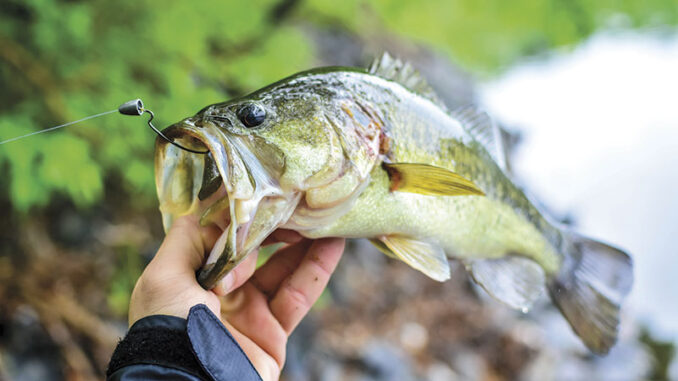
Bass, like redfish, survive being caught on artificial lures and returned to the water very well as long as their slime coat remains healthy and the fish isn’t held out of the water too long.
Credit is due to the millions of anglers who have learned how to properly handle a caught fish to give it the best chance to survive once returned to the water.
The problem with high catch-and-release success is that many lakes already have large populations of 10- to 14-inch bass. The reluctance to keep a few of those smaller fish to eat means those fish go back to compete with just about every other bass, sac-a-lait, catfish and anything else that eats shad, shiners, crawfish, insects, bluegill and on and on.
Most bodies of water only have so much forage to go around. The consequence is there is often only enough food for the fish to grow to 10-12 inches. Being hungry doesn’t stop those fish from spawning, and the population continues to grow even more with each successive spawn until bass wind up relying on baby bass as the primary food source.
Stunted growth
A clear indication of stunted growth with largemouth and other black bass species, like spotted bass, smallmouth and various hybrids, are young-looking fish under 14 inches long that have a giant head and mouth but an abnormally skinny body. Another is if almost every fish caught by anglers over the course of several years is in the 10- to 14-inch range. Waterways with a healthy age variation and size structure allow for anglers to catch several smaller fish but also the opportunity to set the hook into the occasional 6-pound-plus largemouth.
State fisheries managers want to serve the interests of the anglers who buy licenses and support management and hatcheries and other operations through the taxes paid on boat fuel and tackle. Overwhelmingly, bass anglers have told managers they want the opportunity to consistently catch bass while being able to catch a trophy from time to time. An overcrowded lake can satisfy the first request but usually not the second. Overcrowding usually means the genetic improvements biologists try to make in bass populations through stocking efforts get washed out as well.
Gilliland and Dreves were quick to say they and their fellow biologists aren’t asking anglers to keep every bass they catch. Catch and release should continue to be a part of the bass fishing culture, especially fish in the 20-plus inch and larger range. And, not every water body is the same, and regulations on each water body should be followed. Bass can live in anything from a neighborhood drainage ditch to a farm pond to the Mississippi River and the Great Lakes, making a one-size-fits-all approach impractical.
Regular management
Louisiana’s dynamic river swamps and coastal marshes generally don’t support stocking efforts and genetic manipulations, and keeping bass to eat or letting them all go has little impact on population when compared to floods or hurricanes or saltwater intrusion.
But, the state’s reservoirs and some oxbows do need regular management to achieve optimal, healthy, diverse bass populations. For instance, Bussey Brake Reservoir near Bastrop will now have a five fish limit and no bass over 18 inches can be retained. Fish 22 inches or longer can only be kept on site to be weighed and photographed and released. Anglers are encouraged to keep up to five bass under 18 inches so there can be more bass over 22 inches.
Biologists aren’t encouraging anglers to be gluttons. They’re simply saying there’s nothing wrong with keeping a few fish to eat while helping fisheries managers make certain lakes, rivers and reservoirs healthier. It’s a practice private pond managers and deer hunters have used for decades. Bass anglers shouldn’t be ashamed or afraid to use it as well.