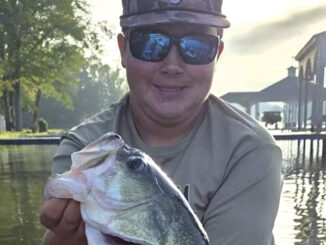
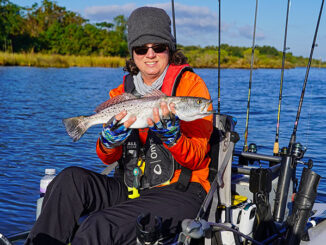
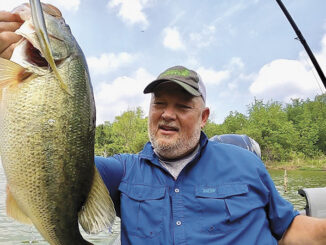
February is the last full month of winter and can provide some excellent kayak fishing if the conditions are right. Several warm spells during January provided warmer than usual water temperatures and some great fishing action. Of course, that could all change as the month wears on, but as long as it doesn’t get crazy cold with severe deep freezes, keep the kayak ready for milder days. Largemouth bass are prevalent all across the state, all except the extreme southern coastal areas near the Gulf. They provide great opportunities for kayak anglers.
February generally kicks off bass spawning activity in many areas of the state and presents an opportunity to catch many bass and even large females laden with roe. Spawning times vary across the state and water bodies, but some areas continue with spawning activities into April. With the introduction of Florida strain bass into many areas, the weight of largemouth bass in those Louisiana areas has gotten heavier over the years, and all of the top-10 record fish now weigh over 15 pounds. Currently, No. 1 comes in at 15.97 and No. 10 is 15.33. It should be noted that the state record has held on for 32 years and was caught at Caney Lake in February 1994.
Of course, the best scenario when one of these big females are landed is for gentle handling and a quick photo followed by a healthy release. This increases their survival rate and helps keep the population thriving. Bass can be caught in fresh waters all across the state and into the brackish areas near the coast. “Marsh bass” as they are known in the southern areas do not generally grow as large as those in lakes and impoundments, but they thrive in these tidal waters. With the construction of several coastal restoration and hurricane protection projects across the coast, brackish waters have expanded and so has the range of the bass.
A popular fish
All of this is great news for kayak anglers since no matter where you live in the state you have largemouth bass fishing nearby. From ponds, lakes, bayous, marshes, and even drainage canals, bass proliferate throughout the state’s waters. Bass are not difficult to catch and are usually caught using a wide assortment of both hard and soft artificial lures. Of course they can be caught on live minnows or shiners, but there really isn’t any need to bother with live bait. Easily ranked as the most popular freshwater game fish across the country, largemouth bass occur in about 34 states.
Louisiana has several famed areas known for big bass, including Toledo Bend, Caney Lake, Caddo Lake, Lake D’Arbonne, Lake Claiborne, Lake Bistineau, Bussey Brake, and many more. However, countless other areas are also prime for catching a big bass trophy. The ‘holy grail’ for many bass anglers is the coveted DD (double digit) bass weighing 10 or more pounds. For many years, an 8-pound bass (which is still a trophy fish in many eyes) was considered to be the prized fish, but as noted above, the overall population has produced more and more double-digit trophies.

Curiously, Toledo Bend records many double-digit bass caught and released each year, but no longer has a fish in the top 10 records, while half have come from Caney Lake in north Louisiana.
Another good thing about kayak bass fishing is that it can be successfully accomplished in the most basic of kayaks all the way to those fully rigged with the latest electronics. Surely there are more lures made for bass fishing than any other species. Gear ranges from spinning to casting, and rods are designed for a wide variety of techniques and lures. From inexpensive soft plastic worms to high dollar hard swimbaits, there are countless lures within everyone’s price range that catch bass.
Spawning bass
The bass spawn provides hungry, aggressive fish that move into shallower waters where the spawning activity and nesting takes place. While some opt for sight-fishing over spawning beds, it is a little difficult due to a height disadvantage. Sitting so low to the water in a kayak makes it difficult to spot the beds. Standing helps, but still doesn’t provide as much height as that of a fishing boat. Setting the hook into a bass from a standing position can be dicey in some kayaks that are not-so-stable.
However, bed fishing is not the only way to catch a spawning bass. Work shorelines and cover areas slowly and methodically with a Texas-rigged worm or creature bait and you will almost certainly find a willing bass. Of course, spinnerbaits, crankbaits, Rat-L-Traps and topwater lures all catch bass under the right conditions and presentations.
Many in the bass fishing tournament circuit frown on keeping bass for table fare. However, this is south Louisiana and eating is a big part of why many of us fish. Bass are tasty and produce a fairly firm, flaky white fillet that is enjoyed by many. The bass stocks are good across the state and liberal limits allow anglers to take home a great-tasting meal.
As is the general rule, smaller fish make better table fare. During the spawn, it is best to release all fish, but if you want to keep a few to eat, keep the smaller ones.
The general rule for most state waters is no minimum or maximum size and a creel limit of 10 fish per angler. Note that several specific water bodies have different regulations with size limits and lower creel limits. Check LDWF regulations to stay in compliance for the specific area you are fishing.
Don’t let February keep your kayak off the water. Fish on days that present safe, milder conditions and there is a good chance you will wear the bass out.