Anglers rejoiced when the Louisiana Wildlife and Fisheries Commission overrode almost all recreational inshore fishing closures in July, and it seemed the panel’s directions to the agency it oversees was clear: no closures that weren’t called for by science or the presence of heavy oil.
Excitement built as the weeks rolled past and one test after another proved Louisiana seafood was safe to eat. Louisiana Wildlife and Fisheries Secretary Robert Barham even promised during Aug. 5 Commission meeting that more openings would be coming soon.
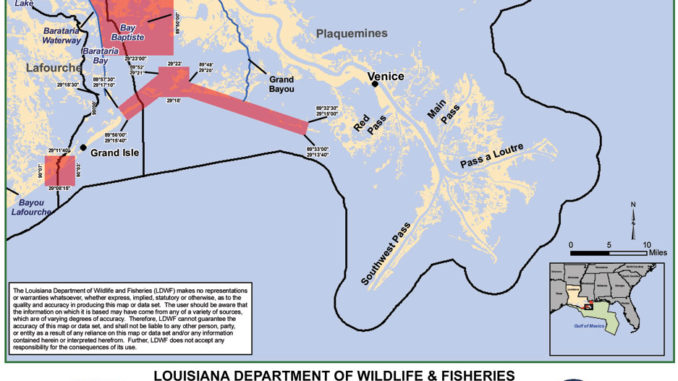
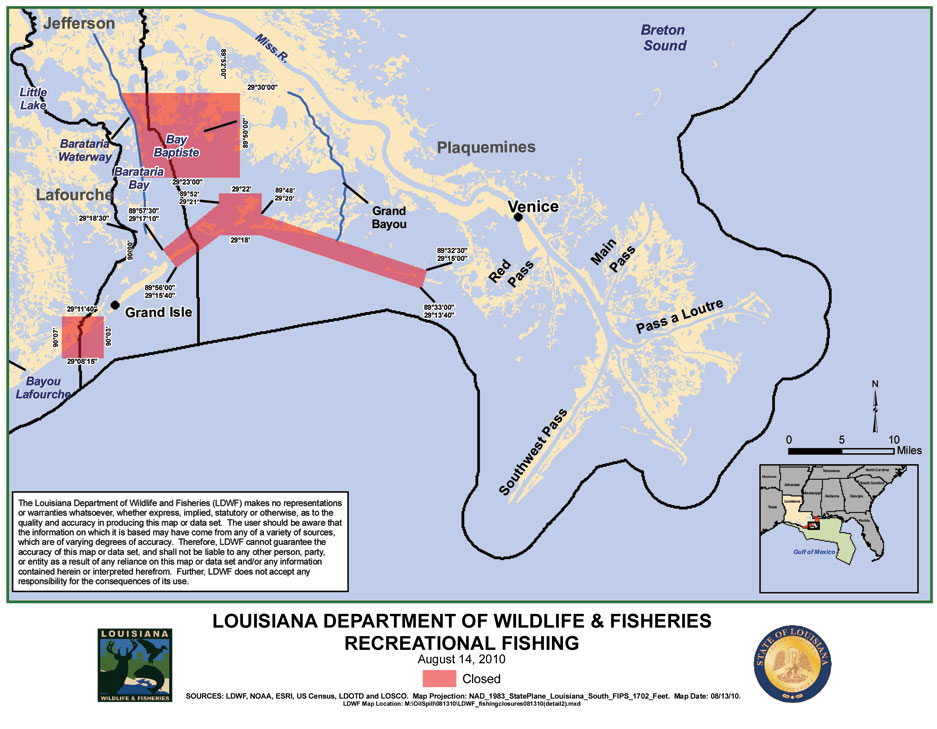
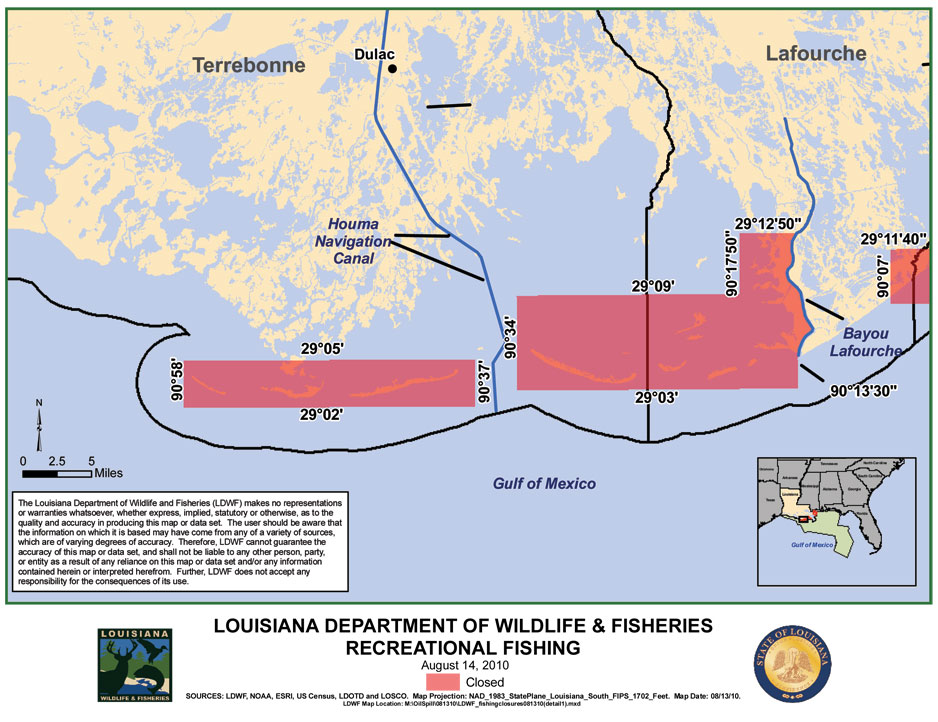
So it came as a shock this weekend when recreational fishing closures were actually expanded to include all the barrier island fringe of the Barataria Basin from Grand Terre to near Red Pass. The latest action also added a closure along the eastern side of Timbalier Bay.
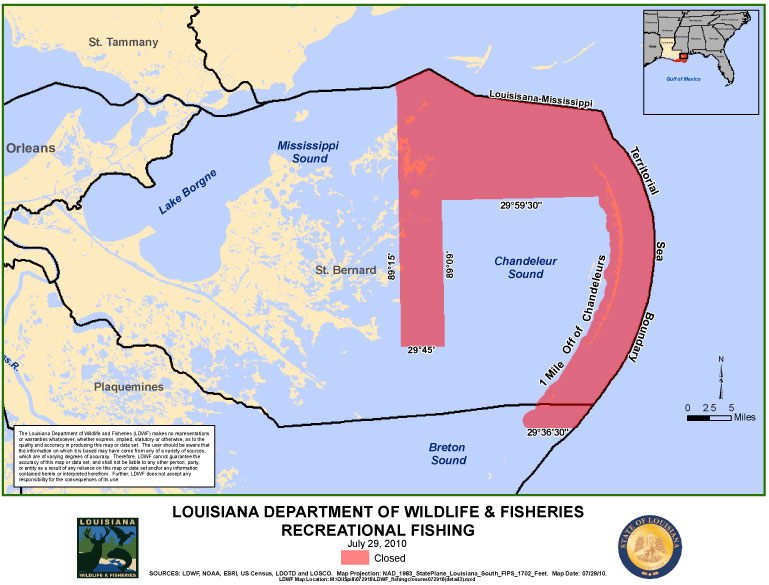
Click here to see the new closures in the Barataria Basin, while changes to the Timbalier Bay closures are here. The closures in the Breton and Mississippi sounds remained unchanged, and are found here.
These closures were announced in a news release Saturday (Aug. 14) that was largely addressing reopenings of commercial fishing.
“With today’s actions, adjustments were made to the areas closed to recreational fishing west of Southwest Pass of the Mississippi River,” the release stated. “Those areas closed to commercial fishing now match the areas closed to recreational fishing.
“LDWF made these adjustments to align with areas reopened based on FDA testing and to allow LDWF enforcement agents to better monitor closed areas.”
That seemingly innocuous statement left many questions.
“WHY?” asked LouisianaSportsman.com regular Made To Go. LDWF “(s)nuck one in eh? This is a real doozy.”
Even Louisiana Wildlife and Fisheries Commission members seemed taken aback, with two commissioners saying they knew nothing of the closures until after the fact.
“Ann (Taylor) called me this morning and told me about the closures,” Commissioner Pat Morrow told LouisianaSportsman.com this afternoon. “I was out all weekend and didn’t see the releases.”
However, Morrow said he still didn’t understand the reasoning behind the closures. He was awaiting calls from LDWF Secretary Robert Barham and Enforcement Division head Col. Winton Vidrine.
“I am concerned,” Morrow said. “I want to understand why the department closed a previously opened area. Unless there’s good, sound reasoning to close an area, I think it should be opened.”
LDWF’s Assistant Secretary Randy Pausina made it clear the closures had nothing to do with any concern over consumption of Louisiana’s seafood.
“There’s been zero contamination,” Pausina said. “There’s no toxicity. There’s none. There never has been.”
Instead, he said the action was taken to bring recreational fishing closures in line with commercial closures agreed upon in negotiations with the federal Food and Drug Administration.
“We just went ahead and matched (recreational closures) up with commercial closures,” Pausina said.
He said he is acting according to an agreement his agency had with the FDA, which called for federal approval for any openings or closures of fisheries in response to the BP Deepwater Horizon oil spill, before the Louisiana Wildlife and Fisheries Commission reopened almost all of the waters to recreational fishing in mid July.
“These are areas deemed to be oiled in negotiations between (LDWF officials) and the FDA,” Pausina said. “If there’s oil present, that’s not a good place to be.
“We were given the authority (by the Commission) to keep areas closed that were deemed oiled areas.”
In response to questions about why these waters were opened for almost a month after the Commission overrode extensive recreational closures, Pausina said it was simply a matter of consistency.
“I deal with every user group, every sector, every sector of the government (state and federal), and at the end of the day, we recommend to the secretary what we feel is in the best interest of the state,” he said. “This is what we felt was in the best interest of the state.”
In reaction to the verbiage about enforcement issues, Pausina said it was important to provide enforcement agents with the ability to uphold closures.
“If you don’t have enforcement, then everything is out the window,” he said.
And, oddly, he contended there should be no difference between the two segments of the fishery.
“There are very rarely instances when a fishery will be closed commercially and opened recreationally.”
And he consistently pointed back to the agreement between LDWF and the FDA, saying all of his recommendations since the BP oil spill began have been in keeping with that policy.
“To date, I have yet to break that protocol,” Pausina said. “The Commission did (by overriding recreational fishing closures); I didn’t.”
Ironically, however, he said the federal government had no authority to dictate recreational fishing closures within state waters.
“I think we’ve proven they don’t have a whole lot to do with it,” Pausina said. “However, as a state entity, we have to work with our federal partners.”
Pausina went on to laud the Commission’s action in July to reopen recreational fishing. And he seemed to almost invite the Commission to overturn this latest action.
“If the Commission feels like they want to override it, they will do that,” Pausina said. “The oversite (for the department) is the Commission.”