Two Louisiana ladies share lessons they’ve learned chasing deer
Kailey Richard almost stayed in bed.
It had been a wet weekend at Loggy Bayou WMA, and the 23-year-old St. Landry Parish hunter was tired. With camp about to be packed up, she knew it was her final opportunity to hunt before heading home.
“I did not want to get out of bed that morning, but I got up because it was the last hunt of the weekend before we packed up and left,” Richard said.
That decision paid off in a big way.
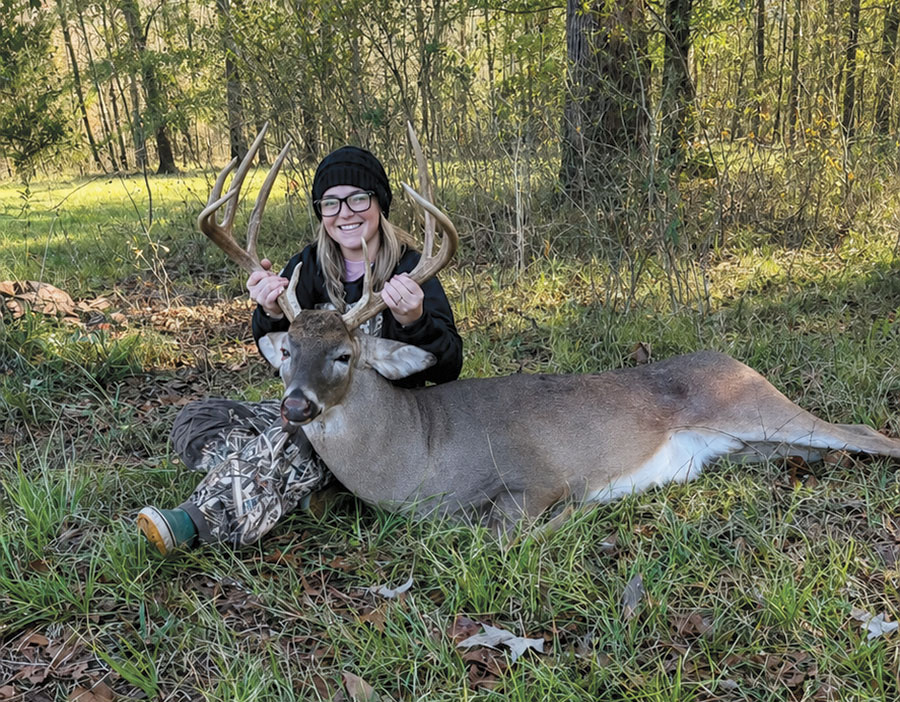
Several hours later, Richard was standing over a 200-pound public-land buck that scored 134 6/8 inches. The mature deer, estimated to be about 4 years old, carried a broken tine that added character to an already impressive rack.
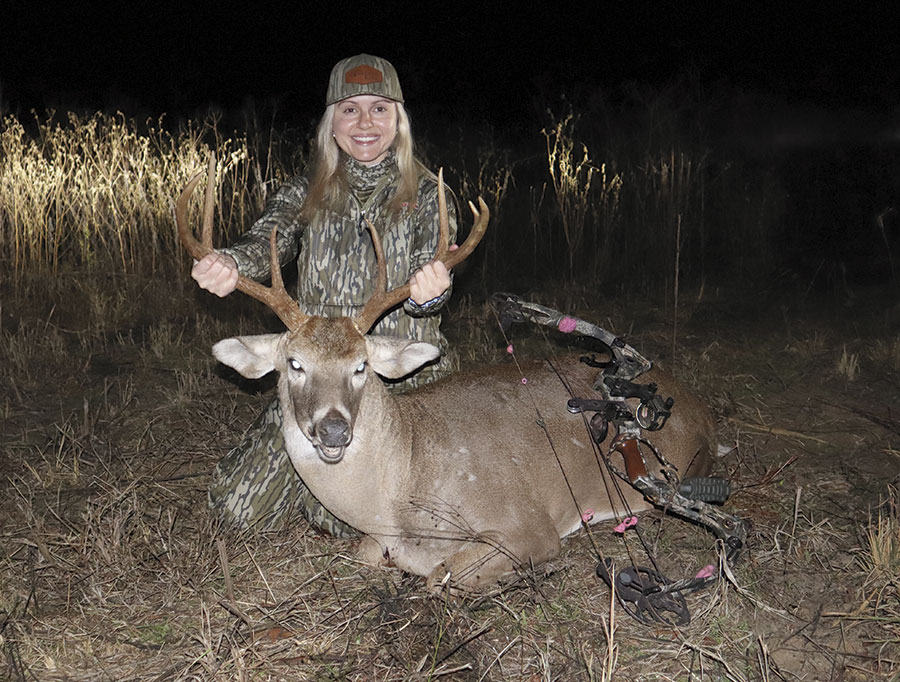
Richard’s hunt was much different from the one that unfolded for Caldwell Parish native Taylor McIlwain. While Richard had no idea her Loggy Bayou buck existed before it stepped into view, McIlwain spent years watching her target buck, a 115-inch 10-point, on trail camera photos.
McIlwain eventually harvested the deer with a bow at only 10 yards after carefully managing a small tract of family property with her father.
Their stories show there is no single path to success in the deer woods. One hunter capitalized on an unexpected opportunity on public land. The other spent years preparing for a chance at a specific buck.
However, both learned lessons that could help other women who want to start hunting or take their skills to the next level.
-
Don’t be afraid to start
Richard grew up around hunting. Her father and grandfather took her into the woods, and her family had access to a small piece of hunting property close to home.
Although she has hunted for about 10 years, she only started deer hunting seriously three years ago. Her first deer was a 4-point buck harvested on her family’s property two years ago.
“I’ve hunted hard for three years,” Richard said. “I really just enjoy the peace and quiet, and beauty of nature. That’s what makes hunting the most enjoyable to me.”
Her public-land buck proves that hunters do not need decades of deer hunting experience to find success. They do, however, need a willingness to learn and enough determination to keep going when a hunt becomes challenging.
McIlwain also encouraged women not to be intimidated by the sport.
“Don’t let anyone tell you that you can’t,” she said. “Just because bowhunting is a male-dominated sport, that doesn’t mean that us women can’t give them some competition.”
-
Learn from experienced hunters
Richard’s productive spot at Loggy Bayou did not come from wandering aimlessly through the woods. A friend who had hunted the area in the past helped point her in the right direction.
The location was a hardwood bottom with thicker cover than many of the surrounding areas. Although her friend had not hunted the spot in a while, he knew deer regularly traveled through it.
That local knowledge gave Richard a strong starting point.
New hunters should not be afraid to ask questions. A family member, friend or experienced hunter can offer valuable advice about deer movement, stand placement, wind direction and terrain. That guidance can shorten the learning curve considerably.
The same is true for women interested in bowhunting. McIlwain recommends visiting a local archery shop when getting started. A knowledgeable bow technician can help select a properly fitted bow and provide instruction on shooting form and technique.
-
Find equipment that works for you
A hunter does not need the newest or most expensive equipment to succeed. However, the equipment should fit the hunter and inspire confidence.
McIlwain has used the same Mathews Passion women’s bow since she was 15 years old. When her target buck stepped out at close range, familiarity with that bow helped her make a clean shot.
“I had to act fast,” McIlwain said. “I drew back my bow, took a deep breath and made my shot.”
Her Bloodsport arrow, tipped with a G5 Montec fixed-blade broadhead, found its mark. The buck traveled only about 30 yards.
Getting comfortable with archery did not come easily at first. McIlwain is right-handed but left-eye dominant, which created an additional obstacle when she began shooting.
“I improvised and started taping my left eye shut to train myself to shoot a bow right-handed,” she said. “Little did I know that it was just the beginning of a lifelong passion.”
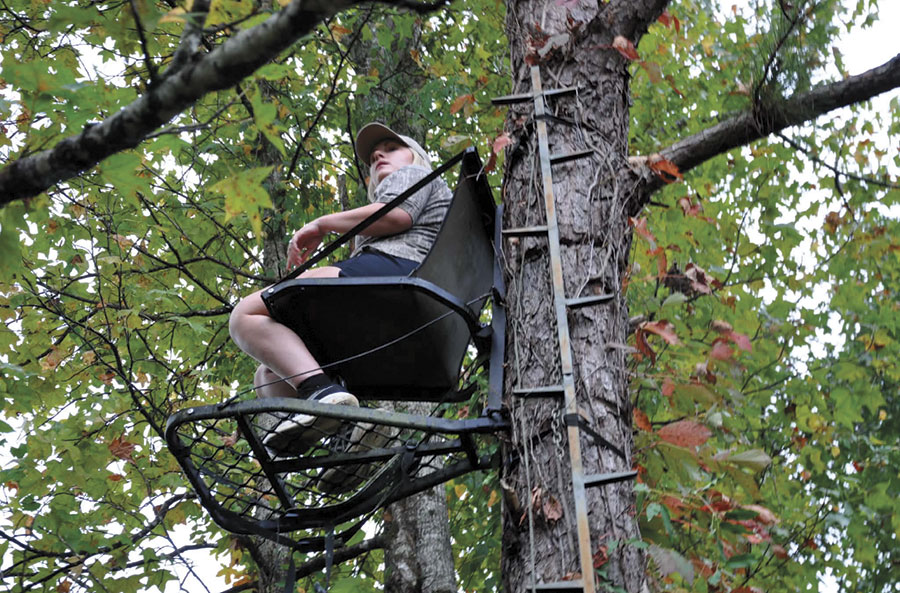
Richard relied on a CVA Scout chambered in .35 Whelen during her hunt. From her climbing stand, she made a 120-yard shot on a quartering buck.
Whether hunting with a bow or rifle, practice matters. A hunter should understand the equipment, know personal limitations and avoid forcing a shot that does not feel right.
-
Be patient when the woods get busy
Richard had plenty of opportunities to pull the trigger before her buck appeared.
After climbing into her stand, she watched several does pass through the hardwood bottom. Eventually, nine does were feeding in front of her.
She decided to wait.
“I wanted to kill a decent deer out of Loggy, so I just waited,” Richard said.
A group of hogs then ran through the area and scattered the does. Richard considered shooting a spotted sow but chose not to risk disrupting the hunt.
After the hogs moved on, she briefly questioned that decision. She had passed on the does and let the hogs walk. The morning could have easily ended without a shot.
Then, less than five minutes later, the buck appeared.
“I watched him walk straight toward me with his head down,” Richard said. “My guess is he was after that group of does after the hogs made some noise and got him up.”
Patience gave her the opportunity she had been waiting for, and she took the shot.
McIlwain’s buck also appeared when she least expected it.
She had climbed into a lock-on stand positioned in a large oak tree along the edge of a creek. The cool, overcast afternoon offered favorable conditions for rut activity. A small 5-point buck was grunting and chasing does nearby, so she used a grunt call in hopes that a larger buck might investigate.
When nothing immediately responded, she turned her attention to a group of beavers playing in the creek.
“I was videoing the beaver on my phone, not paying attention, and when I looked up, I saw my shooter buck,” McIlwain said.
The buck had stepped within 10 yards of her stand.
-
Put in work before the hunt
McIlwain’s success was years in the making.
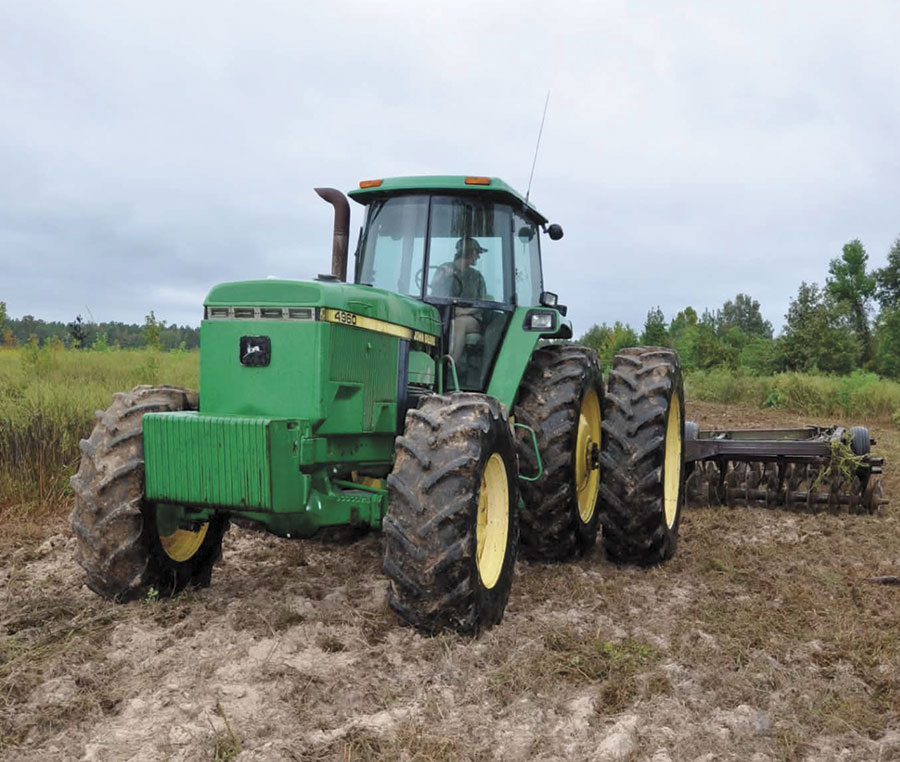
She and her father had worked to improve a 209-acre tract of land in Caldwell Parish. Their efforts included controlled burns and regular property maintenance. When the grass returned in the fall, it created bedding cover deer regularly used.
“My dad and I have been trying to manage our deer and letting them walk for years,” McIlwain said. “Every year we do a controlled burn and clean it up. In the fall, the grass grows back tall, and the deer love it for bedding and coverage.”
In 2021, trail-camera photos revealed a mature buck using the property.
“I was shocked and excited to see a deer as big as him,” she said. “In the area I hunt, mature deer are few and far between.”
She continued monitoring the deer until everything finally came together during the 2023 season.
Not every hunter has access to private land that can be carefully managed. However, public-land hunters can apply the same work ethic through scouting. Richard’s hunt shows the value of identifying thick areas deer use for travel and security cover.
-
Don’t give up too quickly
The work did not end when Richard pulled the trigger.
Her buck was quartering when she fired, and she immediately became nervous about the shot. Richard and the other hunters searched the area and found hair but initially worried that she had only grazed the deer.
They continued looking for about an hour.
Just as they were close to giving up, they found the buck lying in thick cover approximately 50 yards from where it had been shot.
“I was so excited when I found him,” Richard said. “The first person I texted was my dad. He was just as excited for me.”
Her experience is an important reminder for every hunter. A difficult blood trail does not necessarily mean the deer has escaped. Slow down, search carefully and give the effort the time it deserves.
-
Enjoy more than the harvest
A successful hunt does not always end with a trophy buck.
Richard enjoys the peace and quiet of the woods as much as the opportunity to harvest a deer. McIlwain found a lifelong passion by accepting the challenge of bowhunting and learning to overcome the difficulties she faced along the way.
Their hunts unfolded under very different circumstances, but the lessons are similar.
Ask for advice. Find equipment that fits. Practice often. Scout carefully. Stay patient. Keep searching when things get difficult.
Most importantly, do not let anyone convince you that hunting is not a sport for women.
A mature buck may appear after years of preparation. It may step into view on a morning when you almost stayed in bed.
Either way, you have to be in the woods when the opportunity arrives.