Fish released into Calcasieu Lake, the Rigolets and Grand Isle with funding support from Cameron LNG and Sempra Infrastructure
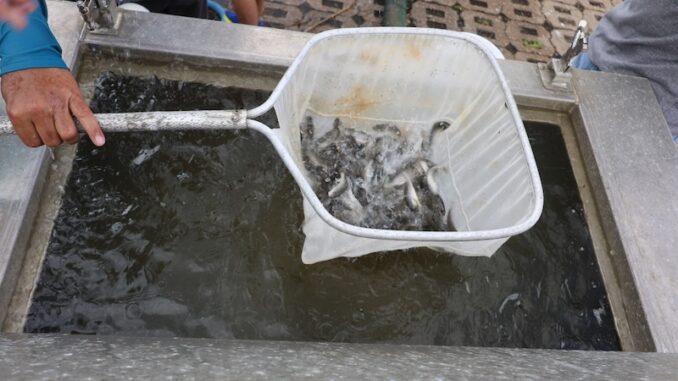
More than 150,000 hatchery-raised red drum have been released into Louisiana waters in the first redfish restocking effort in state history.
The releases were conducted by CCA Louisiana, the Recreational Fisheries Research Institute and the Louisiana Department of Wildlife and Fisheries with funding support from Cameron LNG and Sempra Infrastructure. The flagship release took place Friday, Sept. 11, at the West Cove Boat Ramp on Sabine National Wildlife Refuge, where more than 50,000 fingerlings went into Calcasieu Lake. Additional releases were conducted in the Rigolets and Grand Isle.
Research partners include the Gulf Coast Research Laboratory at The University of Southern Mississippi, where the fingerlings were raised, and Southeastern Louisiana University. At each site the fish were acclimated to local water temperature and salinity before release.
At West Cove, volunteers, partners and elected officials transferred the fish by bucket from the hatchery transport trailer to waiting boats, which carried them into the surrounding canal system for release. The remaining fish were released directly from the dock.
“Our members have been working toward this for years, and it took the right science, the right partners and the right place to make it happen,” said Rad Trascher, executive director/CEO of CCA Louisiana. “Cameron LNG and Sempra Infrastructure stepped up to fund it, LDWF and RFRI helped us get it right, and Louisiana anglers are the ones who benefit.”
“LDWF is a proud partner with CCA and RFRI for this Redfish Stocking Pilot Study and will be contributing to these stocking events by testing the percent contribution of the fingerlings to the wild population through supplying fin clips from fishery-independent sampled Red Drum for genetic testing,” said Ryan Montegut, LDWF Assistant Secretary of Fisheries.
“This program is about more than simply releasing redfish,” said Randy Pausina of the Recreational Fisheries Research Institute. “Using Louisiana broodstock, genetic identification, strategic release sites and long-term monitoring, we will be able to measure how these fish survive, move and contribute to the wild population, helping determine the role stock enhancement can play in Louisiana fisheries management.”
The West Cove site was selected in coordination with LDWF and hatchery staff because it provides suitable estuarine nursery habitat for young red drum. Red drum are among Louisiana’s most important recreational species and a cornerstone of the state’s coastal fishing economy.
“Calcasieu Lake is part of the fabric of this community, and redfish are an important part of what makes Southwest Louisiana such a special place to live and work. Cameron LNG is proud to support an effort that is happening right here in our backyard and could help strengthen this fishery for generations to come,” said Stevie Trahan, public relations manager for Cameron LNG.
“As someone who calls Southwest Louisiana home, I know how much our waterways and fisheries mean to this community,” said Jeanne Willson, community outreach advisor at Sempra Infrastructure. “For our company, doing the right thing includes supporting biodiversity and protecting the natural resources our communities value, and we’re proud to partner with CCA Louisiana on an effort that can make a difference in the communities where we operate.”
All of the fish released came from Louisiana broodstock and were genetically characterized, allowing researchers to link them back to their parents and identify hatchery-produced fish after release. Long-term monitoring will measure how the fish survive, move and contribute to the wild population.