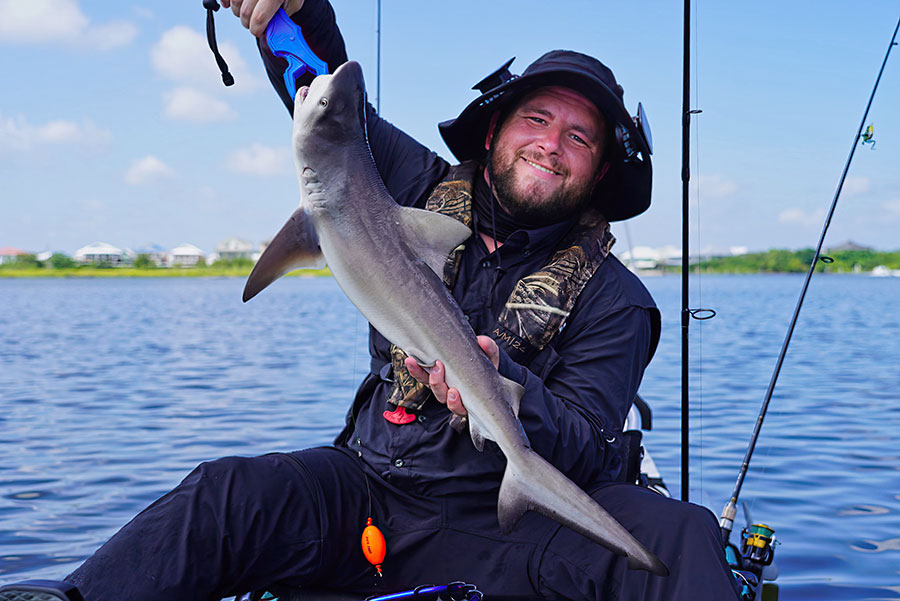
The calendar may say fall, but the heat still says summer. As popular coastal species such as redfish and trout begin their fall transition patterns, sharks remain abundant across the coast in inshore and nearshore waters. Two of the most abundant, blacktip and bull sharks provide great sport and table fare as long as proper precautions are taken both during and after the catch.
Catching and landing any toothy critter in a kayak is not a task to be taken lightly. Sharks are extremely flexible and can bend basically in half. Many an angler has sustained a nasty bite holding a shark by the tail only to have it bend enough to still bite them. The business end should always be controlled, but is not the only worry. A shark’s tail can also impart a powerful blow if it is not properly restrained.
Whether specifically targeting sharks or dealing with an unexpected catch, kayak anglers should be prepared to properly land and restrain a shark, especially if they will be brought aboard for keeping. If you are not planning to keep a shark for dinner, the absolute best policy is to cut the line as close to the mouth as safely possible. Hooks rust away after a short while, and this procedure protects both the angler and shark from injury that can happen trying to wrestle a shark into submission in the tight confines of a kayak.
Proper handling
If you plan to keep a shark for dinner, control of the fish must be swift and deliberate. Some items to have on board make the process much easier. A large net is helpful, but one big enough to handle sharks is not always convenient. A quality metal fish grip is also preferred over the flimsy plastic ones. When your hand is going to be inches from a mouth full of razor blades, a dependable grip is a good idea.
One of the best practices is to quickly dispatch the shark as soon as possible. A small fish bat, club, or even a short length of pipe is great to impart some sharp blows to the head to render it incapacitated before bringing it onto the kayak.
Most sharks make great table fare but need proper handling after the catch to preserve their food quality. Sharks discharge urea through their skin and can quickly take on a wet diaper smell if not properly handled. Sharks, like most species, must be kept with their heads and tails intact while on the water for size and identification purposes. However, gutting and bleeding them immediately is allowed and helps preserve the quality. Also, the sooner you can get the fish into an ice slush, the better. Therefore, if you plan to retain a shark to eat, a large fish bag is a necessity to fit a large shark. If you do not have the ability to properly ice a shark in your kayak, you may need to end your trip early to get a big shark to where you can properly care for it. Plan to fillet the shark as soon as possible after you get off the water. Soaking fillets in lightly salted cold water before cooking also helps enhance the taste.
Targeting sharks
Sharks are regularly caught incidentally, but if you plan to specifically target them, a few specific items make the process easier. A stout rod and reel improves the success of landing hard-fighting sharks. Steel leaders prevent bite-through and also protect your line from the abrasion of a shark’s sand-paper-like skin. A sharp knife for gutting/bleeding, as well as a bat and quality fish grip are highly useful for handling a shark after the catch.
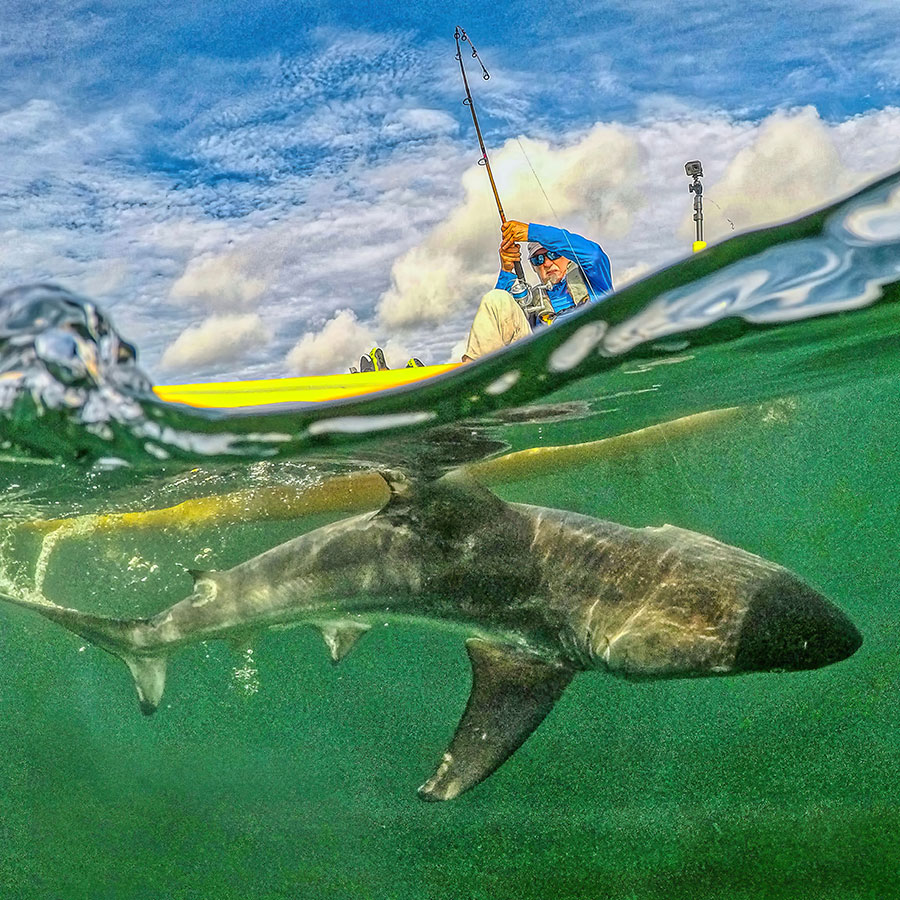
Fishing for sharks is fairly easy and simply becomes a waiting game. Anchor or stake out in an area of moving water which allows the scent of your bait and/or chum to disperse over a wider area to attract sharks. If you plan to use chum, have it pre-cut in order to avoid mess in the kayak. A variety of fish makes for great chum and bait, but chunks of mullet, pogies and ladyfish are hard to beat. They are oily and smelly and work great to attract sharks. A bottom rig with a stout steel leader keeps the shark attached once you get a bite. I prefer tossing out steady bits of chum rather than hanging a chum bag off of the kayak. I’ve had sharks grab and shake a chum bag before and it is not a pleasant experience in a kayak. Hooks are a matter of choice and J hooks as well as circle hooks both do the job. However, use non-stainless hooks so they can rust away if you cut a shark loose.
Shark regulations
Sharks are highly regulated. However, in early 2025, regulation changes for bull and blacktip sharks were virtually eliminated. These two common sharks can now be kept at any size and quantity.
Catching sharks in a kayak can be dangerous, but with proper care and precautions, it can be done safely. A severe bite while in a kayak could prove to be a disaster. Use common sense and do not take any unnecessary chances. When in doubt, the absolute best practice is to enjoy the fight and then cut the shark loose. However, if done properly and safely, one decent-sized shark can provide a kayak angler great sport as well as many delicious dinners.