The head of the deer receives all the sights, sounds and smells on the landscape and processes this information in a matter of seconds
The white-tailed deer is keenly in tune with the environment that it lives in, and when it hears, smells or sees something that is not familiar, the white flag will be raised, the nose is lifted in the air and it disappears out of sight.
To have success as a hunter, it is important to understand how a deer’s head works and to take the necessary action so the deer is not alerted to the danger you as a hunter present. The head contains the eyes, ears and nose of the deer, thus all the sights, sounds and smells are funneled into this Central Processing Unit (CPU). Generally, it is easy to negate the sight and sound issue when hunting, but the deer’s sense of smell will bust you frequently. This is especially true in our Gulf Coast environment where the winds are swirling, often in all directions. But the alert hunter who is aware of the keen senses that deer have can overcome them and have success.
Negating a deer’s senses
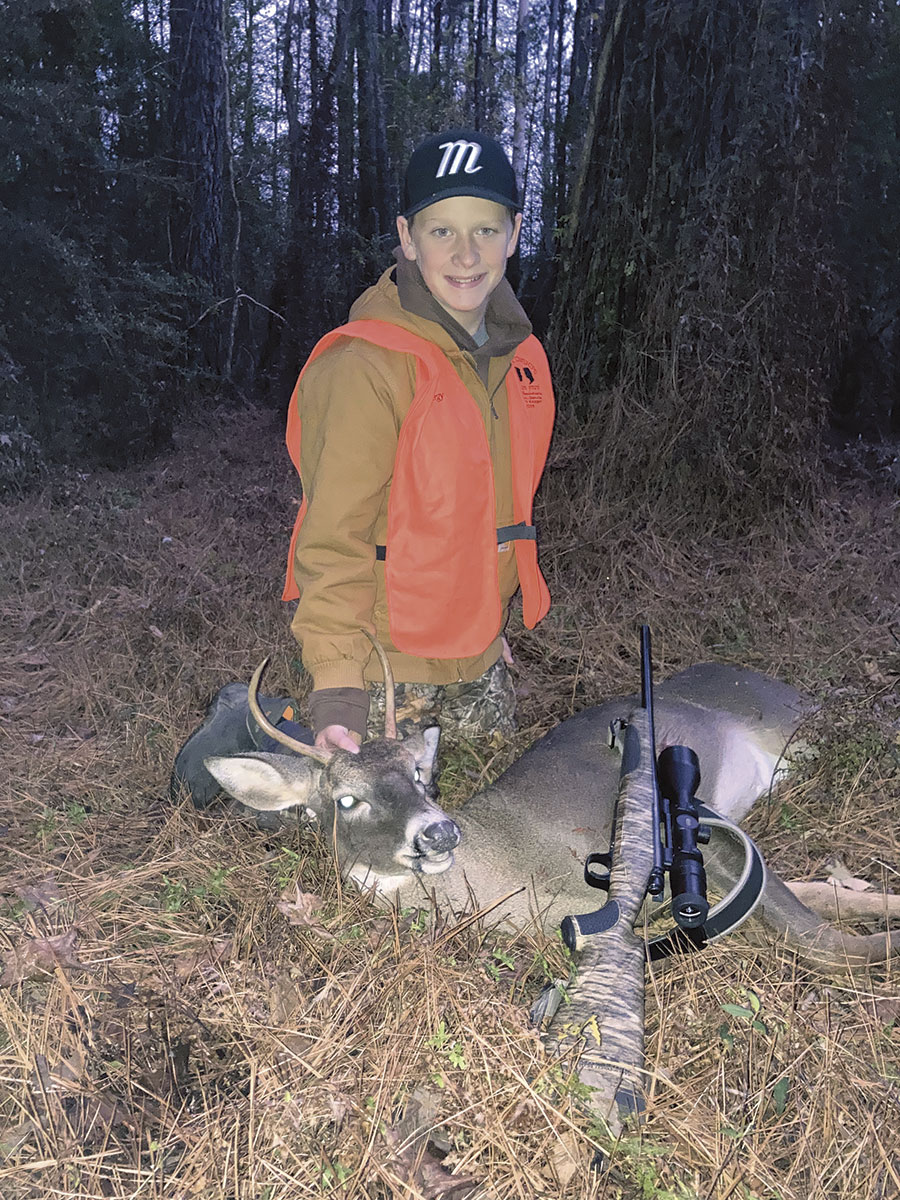
A good example of this is the 2 ½-year-old spike my grandson, John Guidry, killed this past season. I had seen the deer the week before and debated whether it was a very good 1 ½-year-old buck or a young adult. It came out of the woods, crossed the right of way I was on and disappeared out of sight.
The next week, I had John in the stand with me and was telling him about this deer that I had seen the week before. About 5 o’clock, John whispered “there’s a deer.” Sure enough, it was the same buck following the same route it had taken when I saw it. I asked John if he wanted to shoot it and he said yes. After the shot, the deer turned and ran off, only to fall dead in the woods. The deer was not aware of us because we were downwind from it, thus the nose was of no help to it in detecting danger. We were in a ground blind so the deer could also not see us or any movement, and we were being very quiet so it did not hear us. We had negated its senses and therefore were able to harvest it.
When we cleaned the deer, I understood why it was taking this route of travel. Its stomach contained water oak acorns and black gum fruit. The only black gum tree on the property stands on the west side of the right of way, and that is where the deer was going first. After picking up this fruit, it would move to one of the water oak trees on the property that was dropping acorns.
Some might ask why we would shoot that young 2 ½-year-old buck and not let it grow larger. Well, from experience, I can tell you that on our poor sandy-gravel soil, the nutrition level is low, and a buck like this is only going to be a large 4-point at 3 ½ years old and will be lucky if it has six points at 4 ½ years old.
In fact, the second Area 4 buck I killed last season was a 4 ½-year-old that some hunters may call a 6-point. The brow points were not even an inch long and not legal points. My buck could have been the father of John’s buck. That is why I am always preaching that clubs and landowners must understand the growth patterns of the deer on their landscape, and it is always good to shoot these low-end bucks in each age class.
Primary sense organs
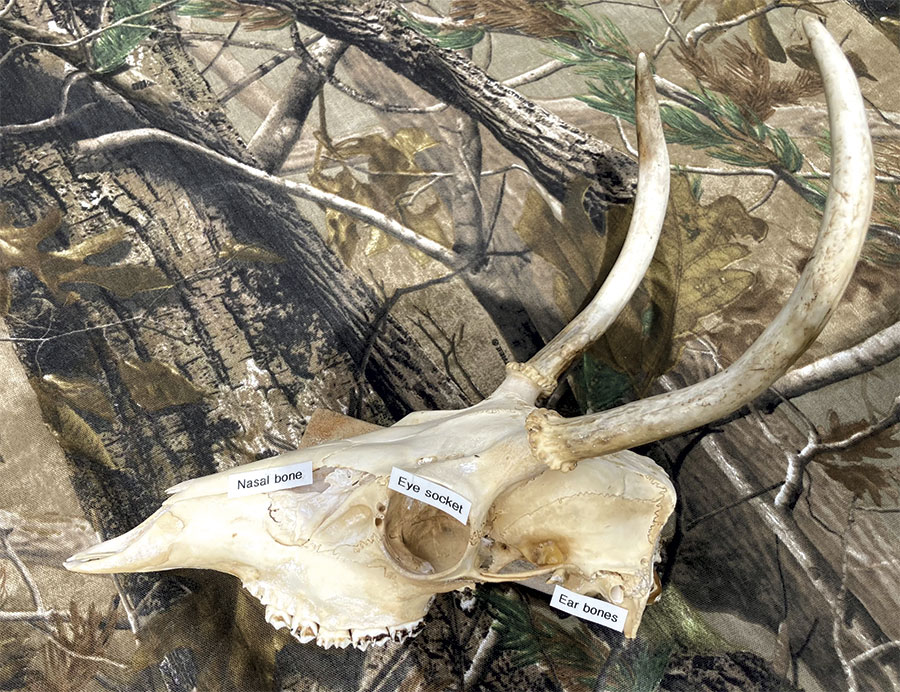
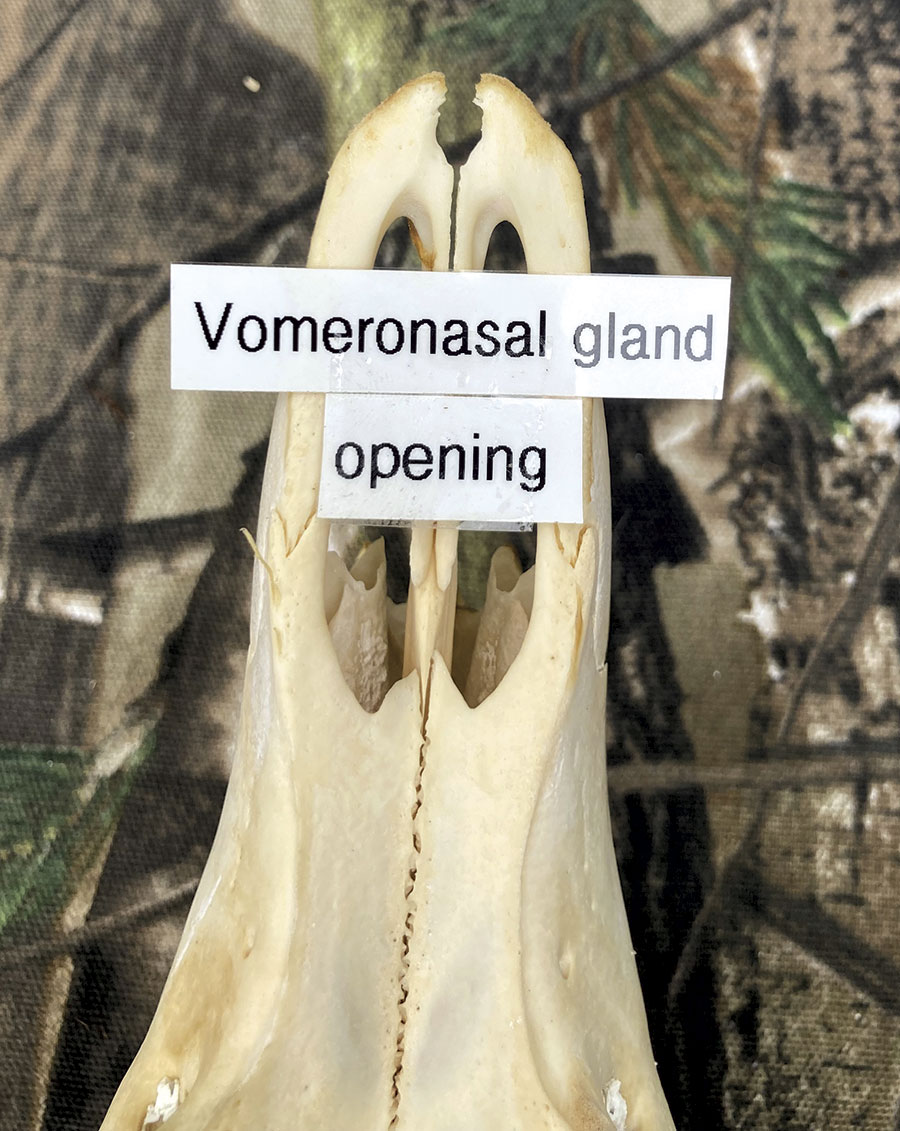
As already mentioned, the primary sense organs of the deer are its eyes, ears and nose. The tongue is also a sense organ, and the deer will use it to decipher scents that it may encounter using the vomeronasal gland located in the front of its upper mouth cavity.
The large eyes of the deer can see you cross your legs in an open deer stand at some distance. But the eyesight of the deer can be negated by blending into the landscape, hunting from enclosed blinds, and just being still. Deer can stand still and look at something for a long time, so that is why it is important to control body movements.
The large ears, primarily made of cartilage, channel the sounds on the landscape into the opening of the ear bones. Like most animals, deer have a good sense of hearing, which is why it is important to be still and quiet on the deer stand. A deer is familiar with the everyday sounds of its habitat, such as a tree limb falling, but a gun barrel hitting a metal deer stand or an uncontrollable cough are not part of its environment. Put the cell phones on silent and be very quiet, even when inside a box stand.
The nose of the white-tailed deer is long and contains numerous bones that can detect the abnormal smells that a hunter brings into the woods. This is by far the hardest of the senses to overcome. The main key is to determine the travel pattern of the deer and be downwind from it. Getting high in a climber or a ladder stand will help control the odors you bring with you. Some hunters have a favorite scent that they will put out to keep the deer from detecting them. A hunter must always be mindful of the wind and the direction it is blowing. As I stated earlier, the nose will get you every time if you’re not careful.
Glands and organs
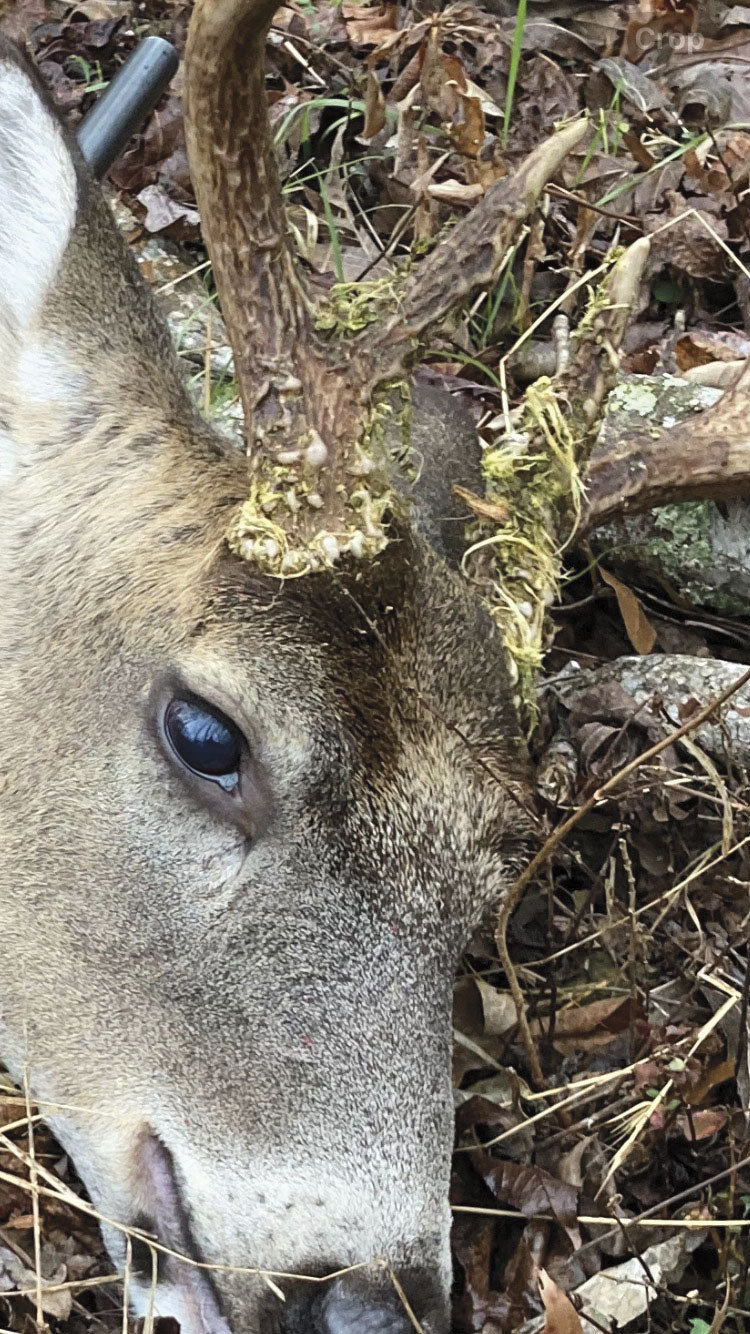
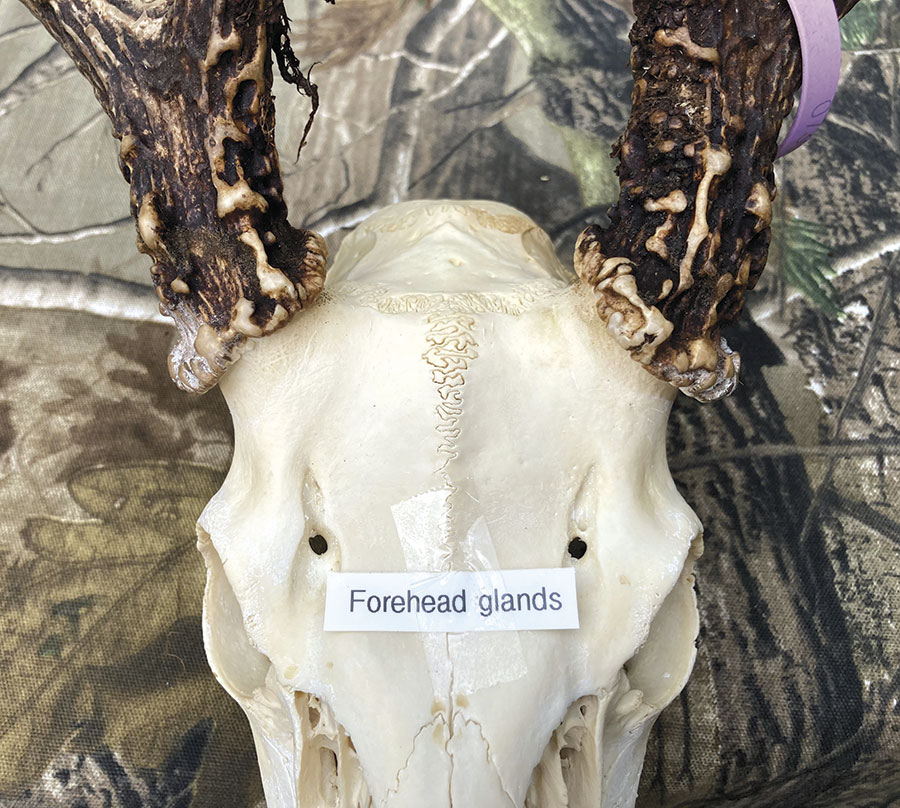
The forehead glands on the skull of a deer are used in its scent communication with other deer. The buck will rub its forehead and antler bases on a tree or sapling and scent is deposited on the rub. This oily scent from the glands will turn the pelage of the hide on the head a pretty dark brown color over the course of the season. The deer will smell the scent from this gland that other bucks leave on the rub, trying to decide who the other deer in the neighborhood are. The eye glands are also scent glands that will leave a scent on a limb or rub and is used for communication between animals as well.
When a buck makes a scrape, it will urinate in the scrape. There may also be an overhead branch that the deer will bite or chew on and leave saliva scent on the wood. This branch is referred to as a licking branch. Again, more ways of communication between animals.
The deer will lick these scents, urine, etc., and place the scent at the opening of the vomeronasal organ. That scent goes directly into the nose and then into the brain where the head will make a decision whether it is a doe that is fixing to come into heat or another buck is in the area. The buck has a behavior where it will raise its head, curl back its upper lip and use the opening to analyze scents that are in the air. This is commonly called the flehmen response and is another way a deer can determine if a doe is in heat.
This is the basic anatomy of a deer skull. Remember the sense organs and how they work and use it to your advantage during the deer season.