Five mistakes hunters should eliminate to kill more gobblers
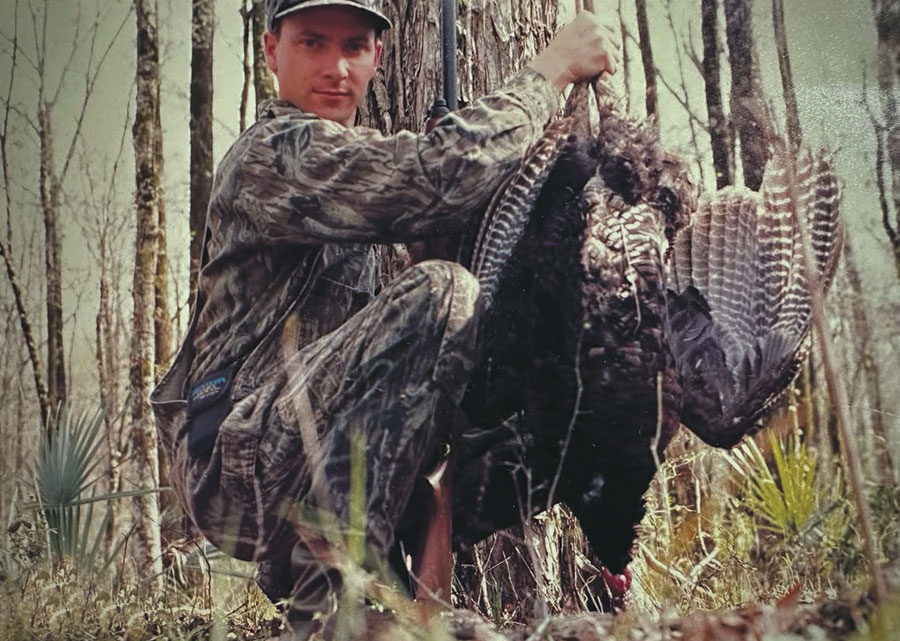
One hour after stepping from my truck, I finally arrived at a small patch of dry ground covered in thick palmetto. It was 1988, and I was making my first turkey hunt. Alone, on the Tensas National Refuge, I estimated my location to be just west of the river, close to Tensas Bluff. Wearing hip boots, I’d followed the gobbles at daylight through flooded woods with water often coming to just above my knees. Now as I sat with my back to a large oak located on the edge of an old road, the turkeys had gone silent.
At that moment, only 21 years old, it never dawned on me just how little I truly understood about hunting the wild turkey. I was too young and naive to have any real understanding of the lessons I would learn over the next 37 years of chasing springtime gobblers.
Looking back, it’s humbling to think about the number of mistakes I made during that time. If there’s a way to blow an opportunity, I can all but promise you with certainty I’ve done it. And while the mistakes are far and wide ranging, over the years I’ve come to the conclusion that if someone could eliminate just five mistakes, they would become much more successful.
Mistake No. 1 – Lack of patience
All hunting requires a certain amount of patience, but turkey hunting requires it in volumes. The sheer number of gobblers I’ve spooked off over the years because of my inability to sit still 15 minutes longer would astonish my fellow hunters. There is a moment in almost every turkey hunt I’ve ever participated in where a gobbler goes silent. He may have answered your every call for a period of time, only to shut up just out of eyesight. It’s these times when minutes feel like hours, and it’s here where a hunter begins to second guess himself. In your mind something has to have gone wrong. A coyote spooked the bird, or he followed a hen away. Maybe he just lost interest or another hunter bumped him. The truth is, in all likelihood, the gobbler is still there, simply waiting on the “hen” to come to him.
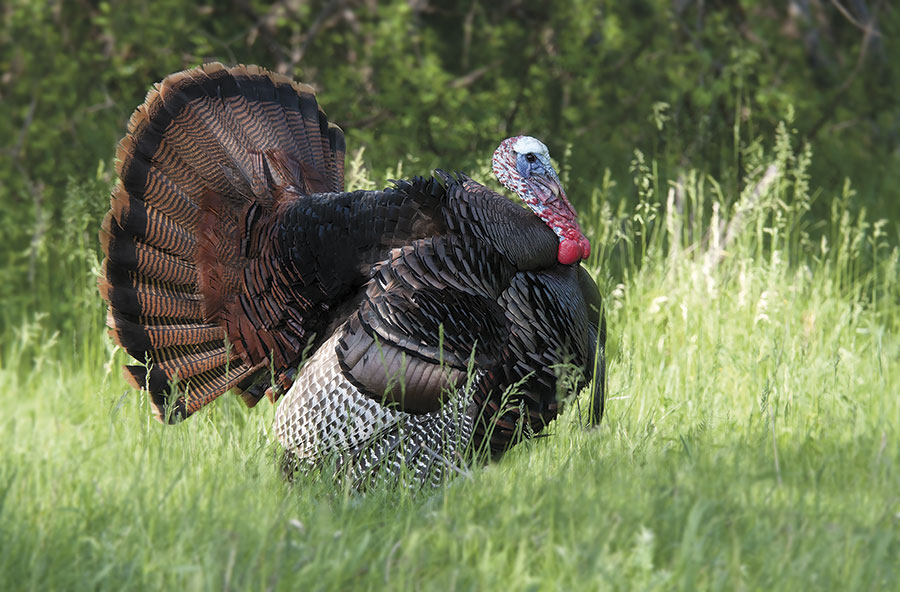
To prevent this mistake you need to understand that turkeys don’t operate on your timetable. Over the years, I’ve seen an eastern wild turkey stand and strut in an area no larger than your average bedroom for hours at a time, hoping to draw a hen to him. In addition to ruining your hunt, you’re also educating him to the fact that there are hunters in the area.
Wait 15 more minutes…..and then wait 15 more.
Mistake No. 2 – Being unprepared with your gun
When I first developed an interest in chasing spring gobblers, there was little in the way of specialized gear for the sport. Today, shotguns, loads and chokes have become ultra-specialized. From custom chokes to TSS loads, turkey hunters have much better equipment than we once did. The problem, however, occurs when folks believe that because the equipment is so good they really don’t need to practice with or pattern their shotguns prior to the season.
Point of aim, point of impact is a term I learned from legendary turkey hunter and former National Wild Turkey Federation CEO Rob Keck. Keck taught anyone and everyone who would listen that just because you have a bead at the end of your barrel doesn’t mean your turkey load will impact where you aim it. And with today’s ultra-tight chokes combined with the small size of a gobbler’s head, being a little off can make a huge difference.
Always take the time to pattern your shotgun, and do so with several different loads and chokes until you find the combination that works best in your shotgun. Once established, you’ll know your point of aim and point of impact, plus your effective range. And those are two confidence boosters you will always want in the spring woods.
Mistake No. 3 – Forcing the mouth call
My old turkey hunting friend and mentor David Hale once said, “The mouth call is the greatest turkey conservation tool ever invented.” And he was correct.
Sure, everyone wants to be like Dave Owens, Matt Van Cise, or any number of Grand National Turkey Calling Champions, but the fact of the matter is, we weren’t all cut out to run a mouth call well. First off, it takes hundreds of hours of practice in order to effectively emulate a hen turkey. Second, most production calls bought in stores are “one size fits all,” which when you consider everyone’s mouth is shaped differently, you begin to understand the difficulty behind learning to run the diaphragm the correct way.
Every call has its purpose in turkey hunting, but to become dependent on one call because it seems like all the cool guys use it will cause you more heartache than happiness. A close friend who I turkey hunt with each season tried for years to become efficient with the mouth call, but to no avail he just couldn’t get it to produce the needed tones. He eventually began working with a trumpet and is now capable of making turkey sounds that in many instances surpass those I can make with a mouth call.
Finally, if you’re serious about learning to run a diaphragm call but haven’t been able to achieve the desired sounds, find someone who makes custom mouth calls and have them build you several different models. Try different reed materials and cuts until you find the one you can run. For years I struggled to make a decent yelp with my diaphragm calls, all of which I purchased off the rack of local sporting goods stores. Then, through work I spent some time with three time NWTF Grand National Champion Billy Yargus. Yargus listened to me call and then built me some custom calls that have enabled me to make decent yelps, cuts and purrs.
Mistake No. 4 – Lack of scouting
There was once a time in turkey hunting where you could go out at dusk, find a high ridge, and listen for gobblers to sound off once on the roost. Today, potentially due to an overabundance of predators, both animal and human, gobblers don’t seem to be as vocal before tucking their heads under for the night. This change forced hunters to put more emphasis on scouting.
Showing up at daylight hoping to be successful is nothing more than a roll of the dice. And with the short season we have in Louisiana, a working man or woman who can only hunt the weekends really doesn’t have much time to get it done. The fact of the matter is, the folks who put the time in prior to the season will always be more successful than those who don’t. My friend Jared Griffing from Winnsboro will get up every morning starting weeks before the season opens and go listen before he has to clock in at work. And every season he kills his turkeys, mostly on public lands.
My favorite scouting practice aside from listening for gobblers early in the mornings is to periodically walk the property I’ll be hunting in search of droppings and tracks. I’ll concentrate on food plots and road areas, creeks or ditches where the ground is usually soft and sandy, that way I can easily see tracks. And if you’re a deer hunter who also turkey hunts, don’t be in a hurry to take those cellular trail cameras down after the season closes. Positioned on openings or roads, if the property has turkeys, they’ll eventually get their photograph taken.
Mistake No. 5 – Sleeping on the midday shift
Over the 30-plus years I’ve packed a video camera to the woods, I can tell you without a doubt that the majority of successful turkey hunts I taped took place between 10 a.m. and 2 p.m. To this day, my standard operating procedure (when possible) is to hunt the roost at daylight. If I can’t get a bird to engage, then I’ll head to the nearest location I can find a good breakfast biscuit.
That time away from the woods often allows gobblers to either finish up with their hens, or see the hens simply slip away. It also provides time for gobblers to reach loafing areas without the chance of busting you as you slip around the woods. If you do strike a gobbler during this midday period, you need to sit down and get ready. Oftentimes, the early morning call shyness has dissipated with his hens, creating a hot tom who will immediately come in search of your calls.
New products for 2026
Strutt’n 360 XDR + Jake
Dave Smith Strutter Jake Decoy
Motion Bundle
$499
Mossberg International Series
28 and 410 Gauge Bores
Mossy Oak Greenleaf
Strutt’n Ridge Beginner’s Series
Small Frame Mouth Calls for Youth
$49.99