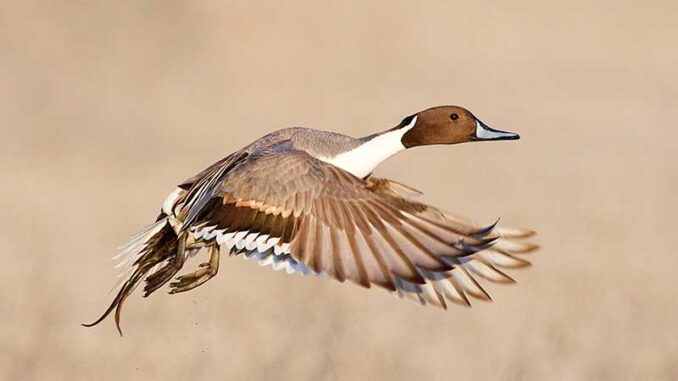
In the middle of September, duck hunters hardy enough to venture into our marshes and brave gnats, mosquitoes, alligators and other stinging and biting things will get a nine-day teal season.
That’s down from a long run of 16 days to take these first migrants from the north.
It’s a grand time to be sure, and it whets a wild waterfowler’s taste for what’s to come later in the year during the 60-day “big” duck season.
The dates and bag limits for the 2025-26 waterfowl season were set earlier this year.
What happened in early August during the Wildlife and Fisheries Commission meeting will govern how duck hunters spend their time in swamps, marshes and flooded fields for the next five years.
What they decided was the same-old, same-old as duck hunters have had for the last four seasons and this upcoming one — two zones with three “segments” allowed in each zone.
The reason for the “segments” is a change in naming the days open to hunters. For years, we referred to them as “splits,” but that latter name has been moved to identify the days between the “segments.”
So, what we have now are possibly three “segments” and two “splits.”
And note well, this year’s seasons have two segments in each zone, not three.
That said and done, it’s time to move to a more pointed discussion of our duck season, and the frameworks allowed by the U.S. Fish and Wildlife Service to set our zones and segments.
The Mississippi Flyway
The commission’s decision largely was based on this year’s survey of hunters with Harvest Information Program (HIP) permits — a federal requirement for hunting migratory waterfowl and birds — with near 12,000 responding to the state’s more than 30 questions about seasons and hunters’ preferences.
Most said they liked the current setup.
Yet, the USFWS allowed states in the Mississippi Flyway (yes, we’re in that flyway) other options: three zones, two segments; four zones, one segment; and, three zones with up to three segments.
The federal folks also allow the southern states in the Mississippi Flyway to open duck seasons Oct. 1 and run through Jan. 31, as long as states stay within the allowed number of days — 60 days this year.
So, let’s backtrack for a moment to understand the work of Richard Yancey, a dedicated Wildlife and Fisheries waterfowl biologist, who, many years ago, proved to the USFWS that Louisiana not only overwintered Mississippi Flyway ducks, but saw a large number of ducks moving down the Central Flyway into Oklahoma, then eastern Texas.
Yancey’s work, and dogged persistence working with federal waterfowl folks, got Louisiana two zones to hunt, maybe the first state to be allowed to make such a move for its duck hunters.
During those last 70 or so years, which included the beginning, and now annual, Breeding Grounds Survey by U.S. and Canadian teams, we’ve arrived at something called Adaptive Harvest Management, a chart that dictates the number of hunting days allowed in each of the four flyways (Atlantic and Pacific are the other flyways).
That chart has given us another 60-day season for Mississippi Flyway hunters.
All that said, it hardly solves some major problems for Louisiana duck hunters.
Negative tides
Take the guys who hunt the marshes and open water along the lower reaches of the Mississippi River, and most any hunter who hunts tide-affected areas along our coast.
January is infamous for negative tides, periods when tidal movement in the Gulf isn’t strong enough to push water into the marshes — some 20 days in most years when hunters cannot access even marginal hunting spots.
It’s hard to believe hunters taking to the areas around Buras and Venice with the same season dates as hunters in Shreveport, but that’s the way our West Zone is drawn out for Louisiana.
For that reason, it always seemed clear to have three zones, an East, a West and a Coastal, a move that would offer some commonality among hunters working their seasons south of the I10-I12 corridor, or maybe south of U.S. 90.
Or, maybe, just maybe, somebody can come up with the novel idea to push the USFWS to think outside the box — maybe.
Maybe we should begin to ask for four zones with two segments, instead of being pushed into a solid one segment season inside those four zones.
What about East, West, East Coastal and West Coastal?
The big fear, we’re told, is that the feds don’t want all us “southern” hunters to be able to go back and forth among the zones and increase our number of “hunting days.”
Pssst! U.S. Fish and Wildlife Service, most hunters don’t have the luxury, nor the means, to hunt many more than 60 days, and most hunts are taken with guides who are fixed in one location and certainly within a single zone.
Most landowners don’t have the ability to own vast acreage over more than one zone to either lease duck-hunting property or hunt it with family and friends.
During the next four years, we can ask for such an outlandish move — maybe.
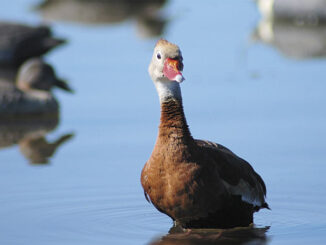
Furthermore, talking about ducks, we haven’t broached the subject of a season for black-bellied whistling ducks or those flooded ag fields in the Midwest holding ducks and keeping them from moving south.
That’s for next time.