Charter Captain Sean Thornton, a 9-year veteran guide in the Delacroix marshes and coastal waters, said September is indeed a transition month.
“I’ve found September to usually be a mirror image of August, with all the heat and humidity and scattered thunderstorms,” he said. “It can also begin to show us an inkling of the fall-like weather to come, especially later in the month.
“We all know that September can show us its nasty side, typically being the primary month for dangerous tropical storms and hurricanes. It’s definitely a “weather watch” month, and we call it a transition month, when trout begin the gradual journey back towards the inside waters from their deeper water coastal summer haunts. It’s an annual cycle that can be challenging to anglers.”
Finding trout
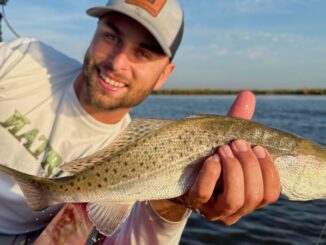
According to Thornton, it also means the trout in particular are usually scattered and can be anywhere from the deeper waters of Breton Sound to the waterways they’ll travel as they make their way back inside.
“You always have to hunt to find fish, but September makes the hunt a bit more challenging,” he said. “But it can also be rewarding if you pick your days with a moving tide, no matter whether it’s rising or falling, and lighter winds.
“When the winds are light you can catch fish no matter what direction it’s blowing from. But a stronger west wind is like poison in the water, pushing that dirty river water everywhere and messing up the fishing. Although you can sometimes find fish under the dirty water where cleaner, saltier water is below the river water. Basically, you just have to try everywhere, be willing to move around for better water, and follow a few standard rules.”
Thornton said the trout will still be hanging out in the same areas as they did in August.
“You’ll still have to make the run to the outside waters for the best chance of finding trout,” he said. “Stone Island, Iron Banks, the various rigs and structures like the Compressor, the old Black Tanks, the Wreck and all the way out to Breton Island.
“You can also head over to the islands and structure in Bay Eloi, and of course, the MRGO rocks. You’ll want to fish deeper, 5 or even 6 feet under a popping cork in those outside waters, and live shrimp or Vudu shrimp have produced best for me. And be prepared to bounce around from place to place to do it, but you should be able to put together a nice box of fish.”
Look for schools of reds
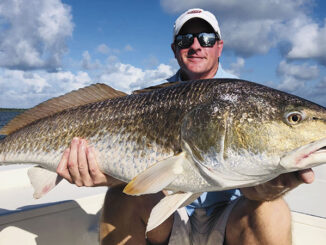
Thornton likes to focus on redfish this month.
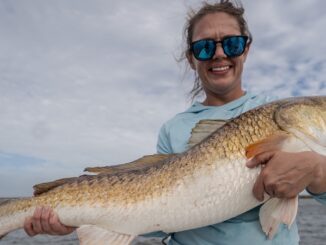
“If I’m after bull reds, I’ll fish the banks of any of the bigger fringe bays, those right on the edge of the coast, like Lake Robin, Lake Coquille, Two Trees, Lake Calebasse, Lake Machais, Lake Campo, Oak River Bay… any of those big outer bays,” he said. “Look for points with current lines and look for birds diving over schools of feeding reds, and toss live or dead shrimp under a cork.”
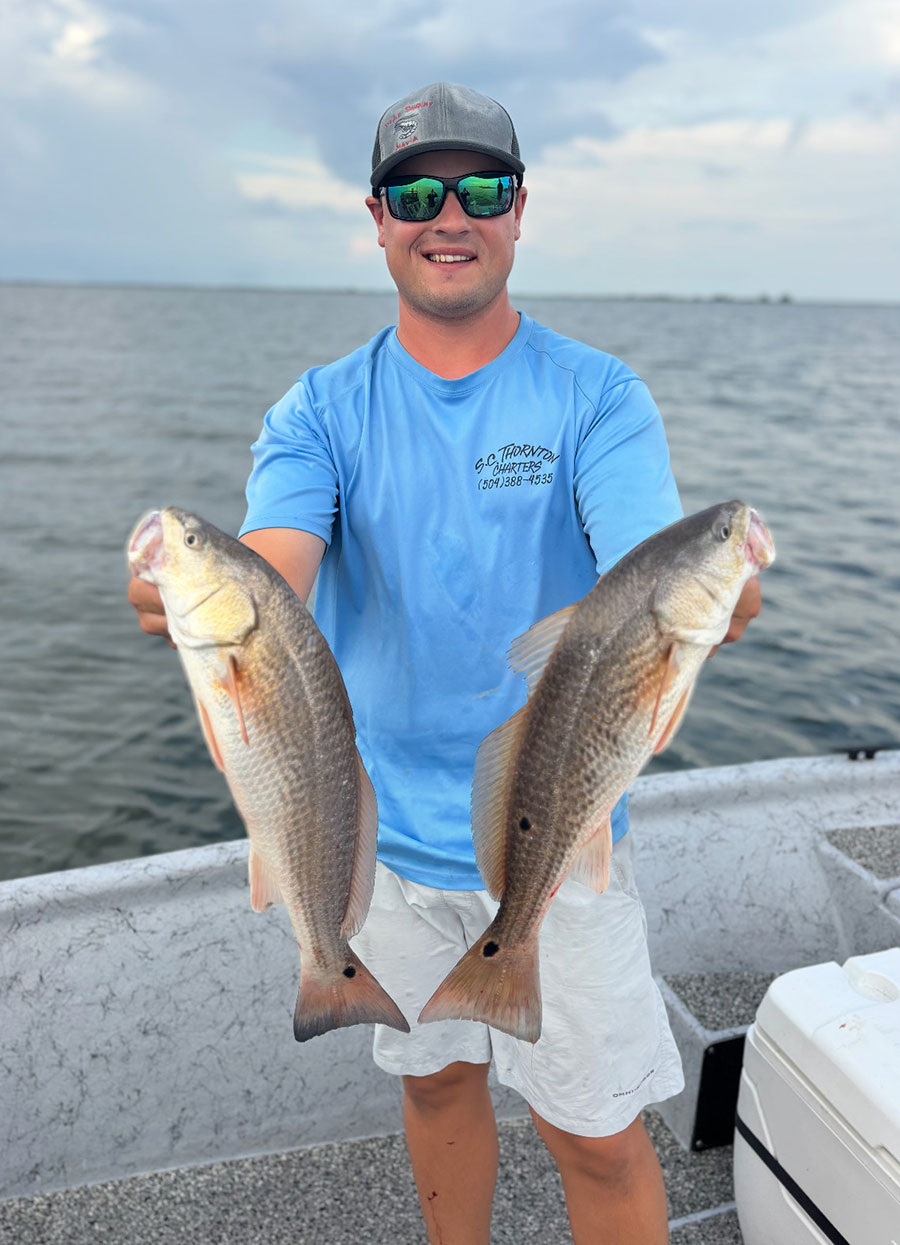
For the slot-sized, keeper reds, Thornton said try points and cuts in Little Lake, Lake Fausan, Shrimp Lagoon, Bay Andrew and any of the bigger interior lakes and lagoons. He said the water in the duck ponds is probably still too hot to be productive. Live or dead shrimp under a cork are the best baits, he said.
Capt. Thornton can be reached at (504)388-4535 and www.scthorntoncharters.com.