While it requires some effort, experiencing turkey hunting success on small properties can be a reality if birds visit the property on a regular basis in response to good habitat management.
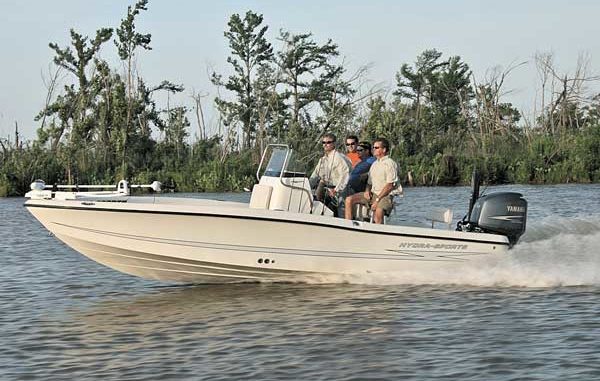
I recently received the following e-mail from a reader: “I have a 22-foot bay boat with a 200-hp motor on it. The boat is heavy, but does an honest 52 mph. I want to upgrade to a new 225 hp. I have limited my choice to two motors. One is a 4-stroke and the other is a direct-injection 2-stroke.
“Many people have recommended that I go to the 4-stroke because of fuel economy, savings on oil, smooth and quiet operation. What are your thoughts?”
I do not like to make comparisons of one manufacturer to another. I truly believe that in today’s marine market, there is no such thing as a bad engine manufacturer. All of the engine manufacturers work extremely hard in order to bring to you the best product available, and I believe that each in its own way has succeeded in doing just that.
Your job as a consumer is to research each of these products in order to determine which best suits your boating needs. Just because your fishing buddy claims that a certain design engine is more fuel-efficient does not necessarily make it so. You need to consider the overall combination of your boat, the potential new motor and how you are going to use that rig before making the final decision to buy one engine or the other.
There are many great sources of information about the new outboards that are on the market today. These sources include boating magazines, especially those that report on new-product testing. These tests are usually performed in a scientific manner, and include the use of extremely accurate measuring devices so they can report real-world results on such things as speed, acceleration, load-carrying ability, fuel consumption and noise abatement.
Engine manufacturers will often hire independent testing agencies to test their engines and make reports on their findings, but keep in mind that the engine manufacturer is not going to publish any reports that are less than favorable toward its engine.
Also watch that the comparisons are truly apples to apples. For many decades we have had nothing but 2-cycle outboards. When the 4-cycle engines were developed, some of the comparisons that were published were actually comparing the new-technology 4-cycle engines to older-technology carbureted 2-cycles.
If you are going to compare 2-cycles and 4-cycles, then be sure that the 2-cycle is the newest computer-controlled direct-injection model. You may be surprised at the results you find.
Another great source of information is the boat manufacturer. Many boat manufacturers have their own testing programs in which they order several different brands and sizes of engines, rig these engines on their boats and test the rigs to see how each package performs.
Try contacting your boat manufacturer. Tell him what boat you have and what engines you are considering. Ask if he has any test data for that boat and those engines. Many times that test data from the boat manufacturer will include valuable information such as whether to use a jack plate and how high the engine is mounted on the transom of the boat and, most importantly, it will also include the brand, type and pitch of propeller that was used.
Probably the most important person to talk to is the dealer you may be purchasing that new engine from. Allow him to explain the features and benefits of the engine he sells, and then go talk to his competitor to find out the features and benefits of that engine.
Keep in mind that a good salesman is going to emphasize his engine’s strong points. He is not going to give you reasons not to buy his product. You have to weigh all of these features and benefits in order to determine which engine will best fit your boating situation.
While you are talking to the dealer, have him show you around his service department. Remember that any product made by human hands can and will break down at sometime in the future. If you are going to spend a large sum of money on this product, you want to be absolutely certain that the selling dealer is fully capable of diagnosing and repairing any problems that may occur within a reasonable period of time. Nothing could be worse than to have your new motor sitting in the dealership shop for several weeks waiting to be repaired during the peak fishing season.
You are talking about spending a fairly large sum of money on this new outboard. Take the time to research each of the engines thoroughly. Do not rely on the word or your fishing buddy or, worse yet, the opinion of your brother-in-law. Decide which engine best fits your individual situation and go have fun on the water.
If you have any questions about your boat, motor or trailer, you can e-mail me at theboatdr@yahoo.com.